Engineered structural systems tailored for general contractors, commercial developers, architects, and high-end residential builders in the Kansai region.


Osaka's urban density and microclimates require engineering strategies that go beyond typical outdoor designs. Located in the Kansai region, Osaka has hot, humid summers and is exposed to the Pacific typhoon belt, resulting in severe seasonal weather. For developers, landscape architects, and procurement managers looking for a reliable aluminum freestanding pergola supplier in Osaka, selecting systems that balance structural load capacity with aesthetic design is critical.
Our freestanding systems are built with extruded 6063-T6 aluminum alloys. This material is essential for resisting Kansai’s extreme weather events. The alloy undergoes a precise thermal treatment that increases its tensile strength to at least 215 MPa. This ensures the structural frame can support the dynamic loads caused by seasonal winds, particularly during late summer typhoons originating in Osaka Bay.
Additionally, urban heat island (UHI) effects in Osaka’s commercial districts—such as Umeda and Namba—make temperature management a priority for outdoor spaces. Traditional wood structures warp and deteriorate under humid conditions, while steel frames require heavy maintenance to prevent rust. High-performance aluminum bioclimatic louvered roof systems address these challenges by providing structural strength, corrosion resistance, and thermal performance that help control solar heat gain.
Space optimization is a key economic driver in Osaka's real estate market. Commercial properties, such as hotels, retail developments, and restaurants, use outdoor spaces like rooftops and terraces to increase usable area and drive revenue. By installing a freestanding aluminum louvered pergola, operators can create functional outdoor areas that adapt to changing weather, ensuring year-round use.
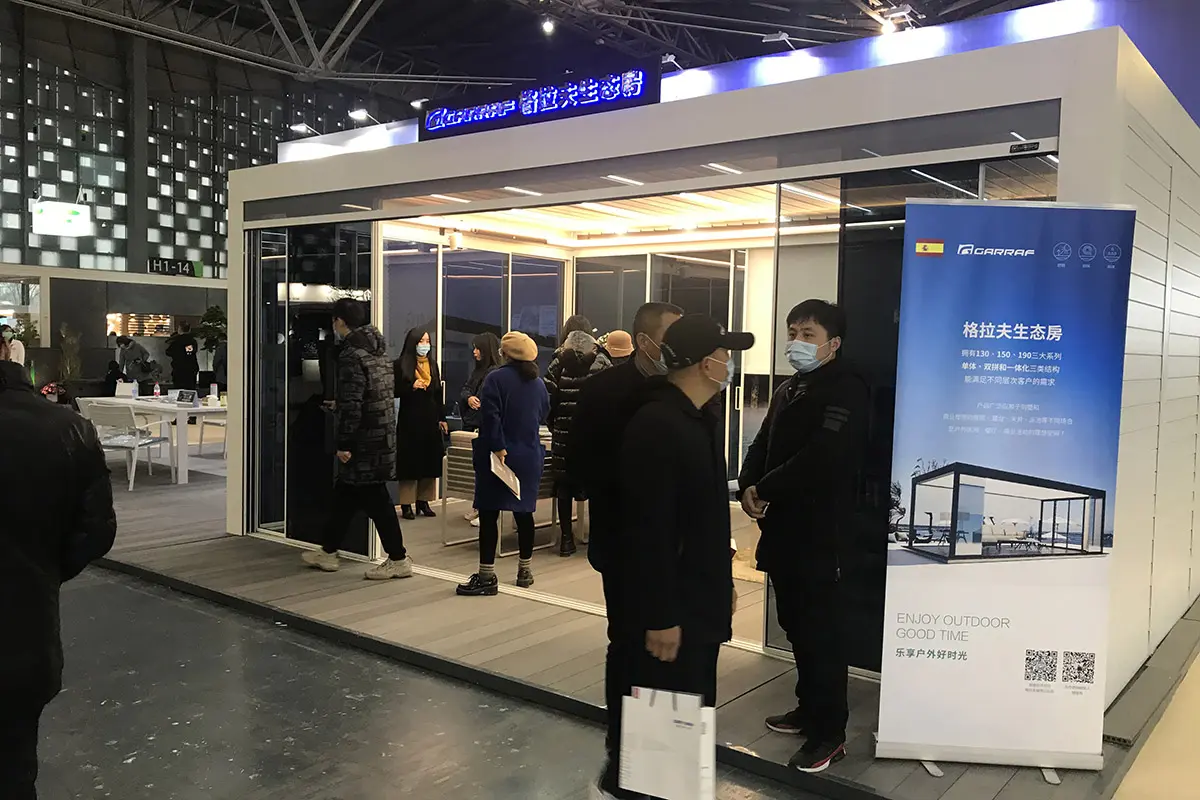
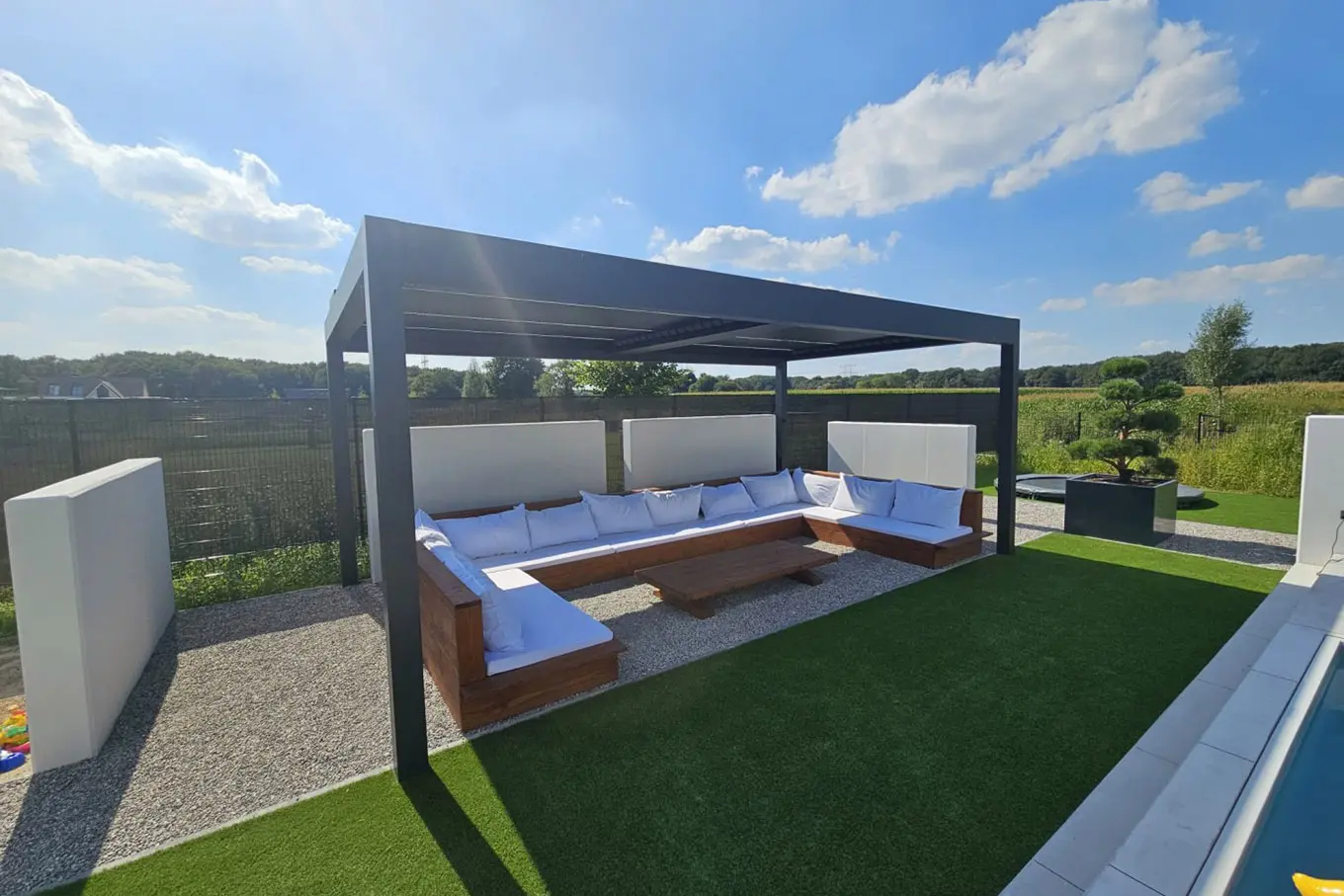
Our modern outdoor solutions combine clean, contemporary design with practical performance. They are built to blend indoor comfort with outdoor open-air living, suitable for both residential projects and commercial spaces.
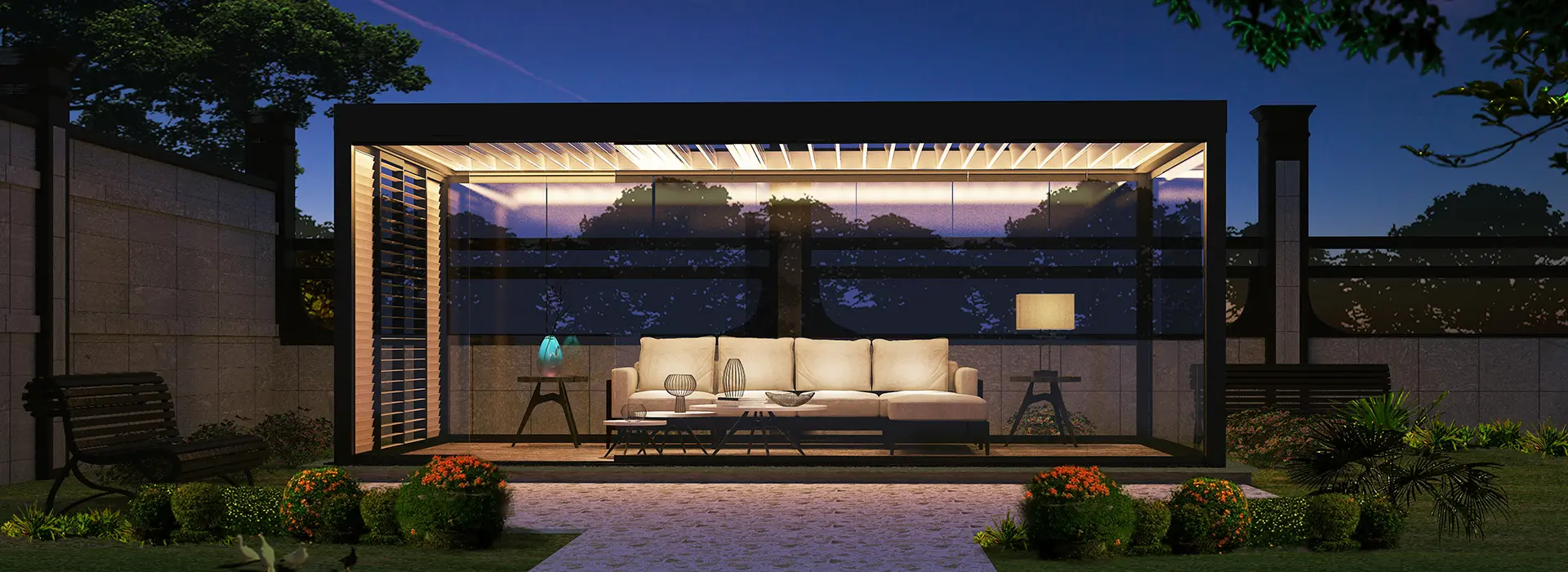
For large-scale construction projects in Osaka, structural safety is a critical design requirement. The Kansai coastal strip, stretching from Sakai up through Osaka Port, is classified as a high-wind exposure zone. When designing freestanding structural structures, calculations must account for wind uplift and shear forces to prevent structural failure.
Our pergolas feature dual-walled, aerodynamic louvers with integrated EPDM gaskets. When the louvers are closed, these gaskets create an interlocking barrier that resists water intrusion under heavy rainfall. The internal structural framing includes a hidden drainage system: water collects in perimeter gutters and drains down through the corner columns, keeping the space below dry and preventing uncontrolled runoff.
| Performance Criterion | Technical Specification Value | Standards Compliance | |
|---|---|---|---|
| Alloy Grade | Extruded Aluminum 6063-T6 Temper | ASTM B221 / JIS H4100 | Premium structural yield and durability |
| Wind Load Rating | Up to 46 m/s (Freestanding Configuration) | Japan Building Standards Act | Tested for typhoon conditions |
| Surface Treatment | Qualicoat Class 2 Electrostatic Powder Coating | ISO 2813 / AAMA 2604 | Resistant to salt-spray and UV degradation |
| Snow Load Capacity | 120 kg/m² (Reinforced Profiling) | EN 1999-1-1 Structural Design | Suitable for Kansai winter conditions |
| Motorized Control | IP67 Waterproof Linear Actuators (24V DC) | CE Certification / UL Certified | Integrates with building control systems |
Osaka’s proximity to Osaka Bay exposes outdoor structures to salt spray and high moisture levels, which can cause galvanic corrosion. To protect the structures, we apply a multi-step surface treatment process: chemical pre-treatment, chrome-free conversion coating, and a Qualicoat Class 2 powder coat finish. This helps protect the aluminum profiles from corrosion, preserving their finish over long-term use.
Our full range of structural solutions is engineered to meet the performance and durability requirements of projects in Osaka and international markets.

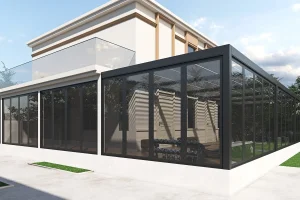


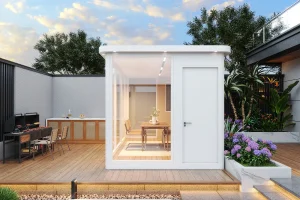
Specialized systems designed to provide light, thermal, and wind control for projects throughout Japan.
As cities look to reduce greenhouse gas emissions and implement sustainable designs, integrating bioclimatic technologies into construction projects is an important strategy. In Japan, initiatives target Net-Zero Energy Buildings (ZEB) to improve energy efficiency in both commercial and residential projects.
Freestanding pergolas with motorized, adjustable louvers support these efforts by providing solar control. By adjusting the louver angle, operators can control the amount of direct sunlight entering adjacent interior spaces. In summer, shading these areas reduces the heat load on the building, lowering cooling requirements. In winter, opening the louvers allows solar heat to help warm the space.
In high-density urban areas like Osaka, design requirements often focus on reducing the carbon footprint of building materials. Aluminum structures support sustainability goals through their durability and recyclability. The long service life of powder-coated aluminum helps reduce replacement cycles, contributing to lower lifecycle environmental impacts.
Our pergolas can be integrated with smart environmental sensors and Building Management Systems (BMS). Using wind and rain sensors, the louvers adjust automatically to changing weather. If wind speeds rise, the louvers rotate to an open position to reduce wind load and protect the structural frame. When rain is detected, the louvers close to shield the space, with water directed through the internal drainage system.
Featuring our premium climate-adapted lines. These systems are designed to balance thermal control and structural strength.
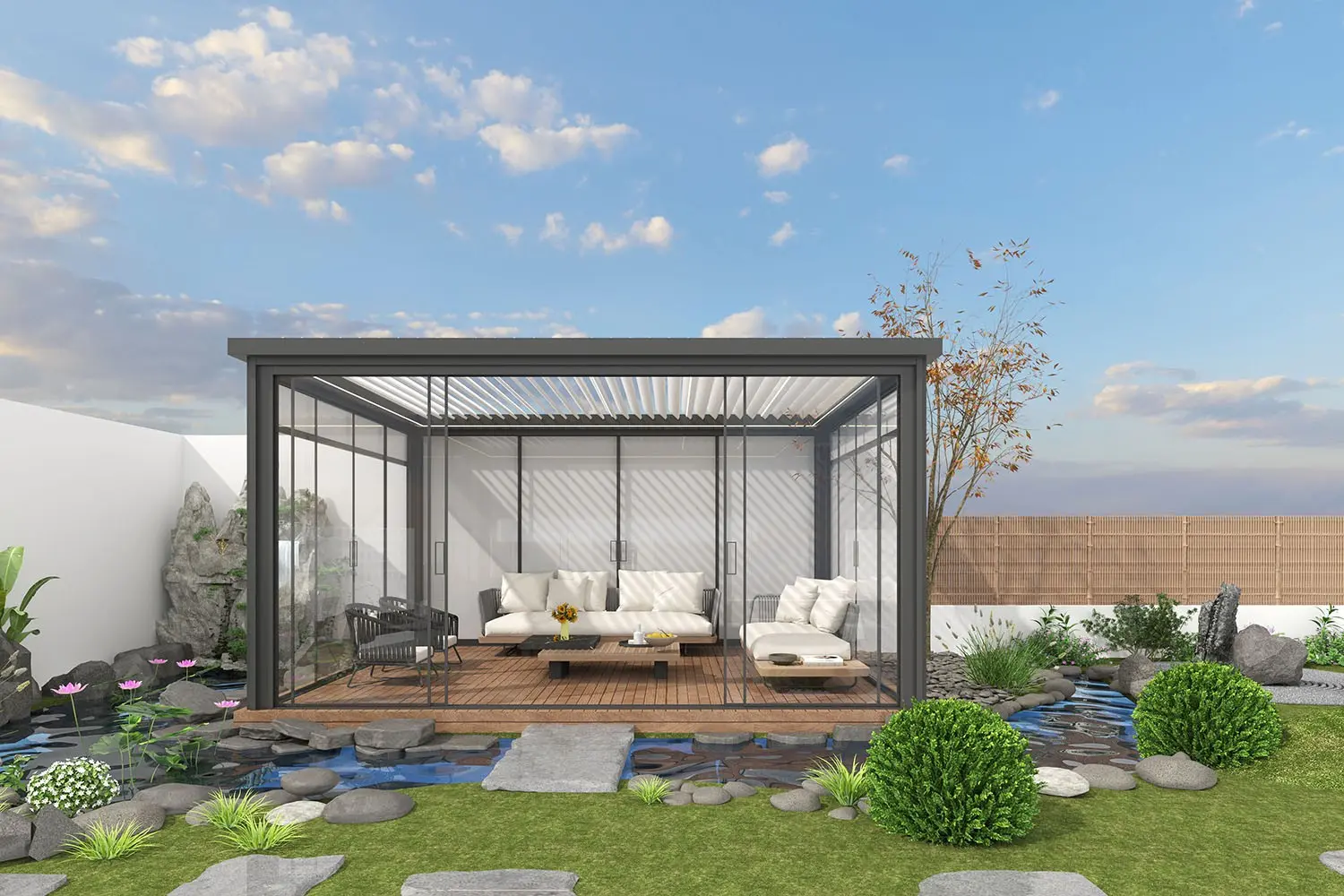
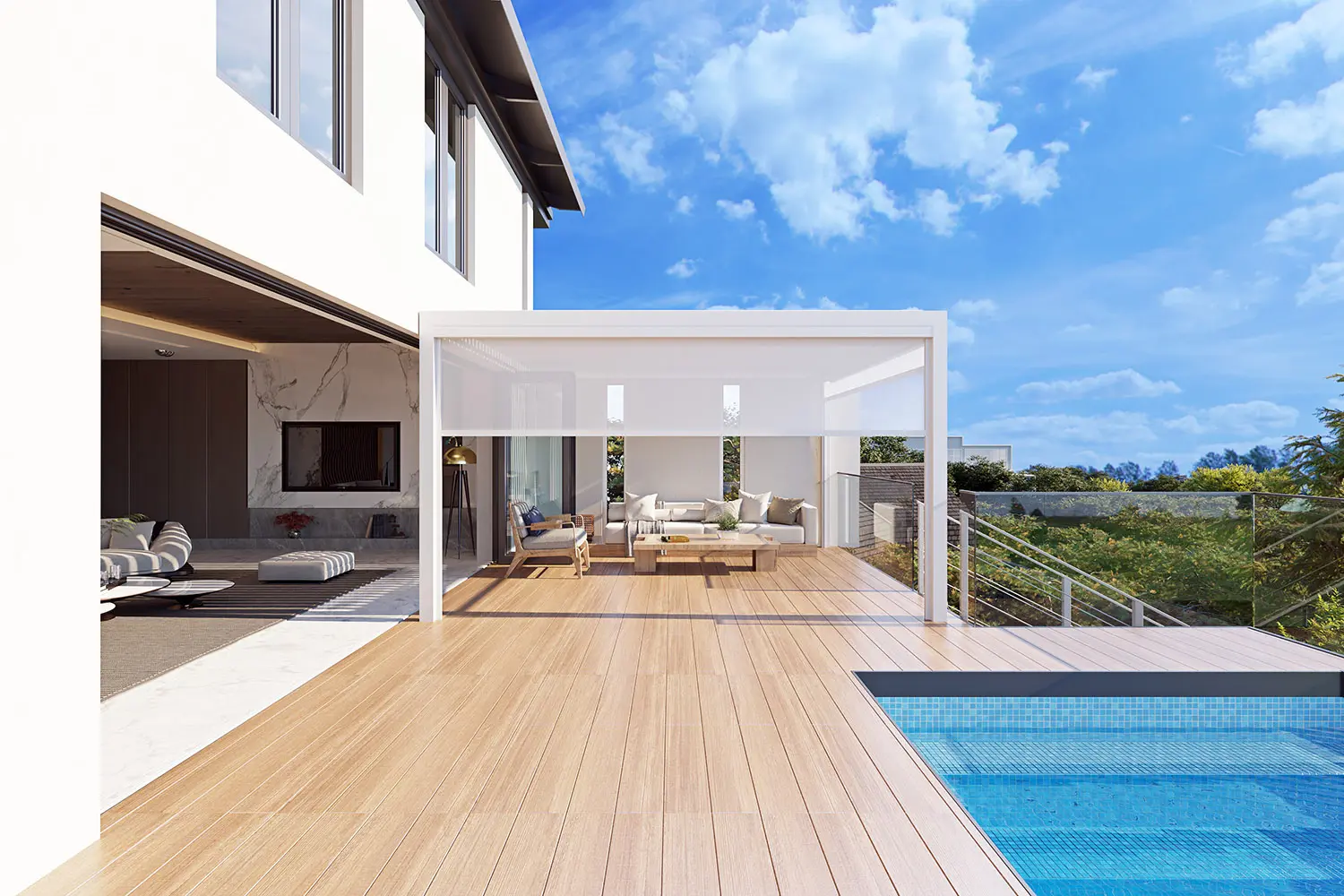
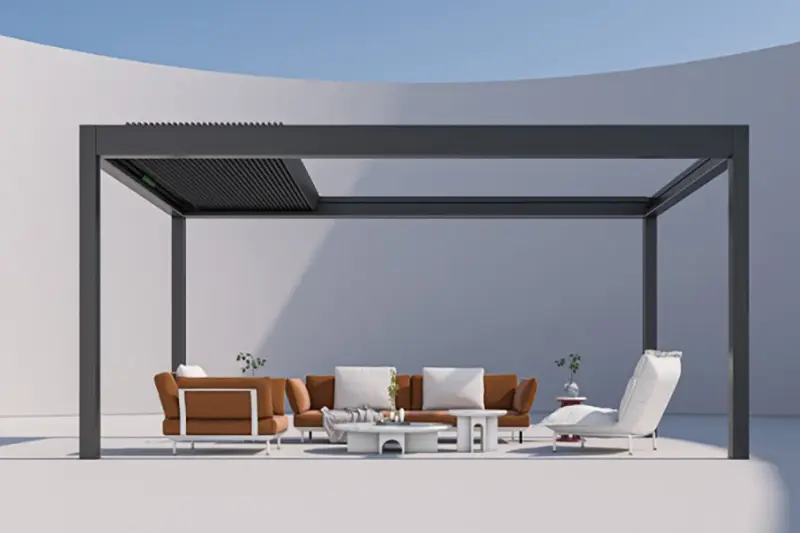
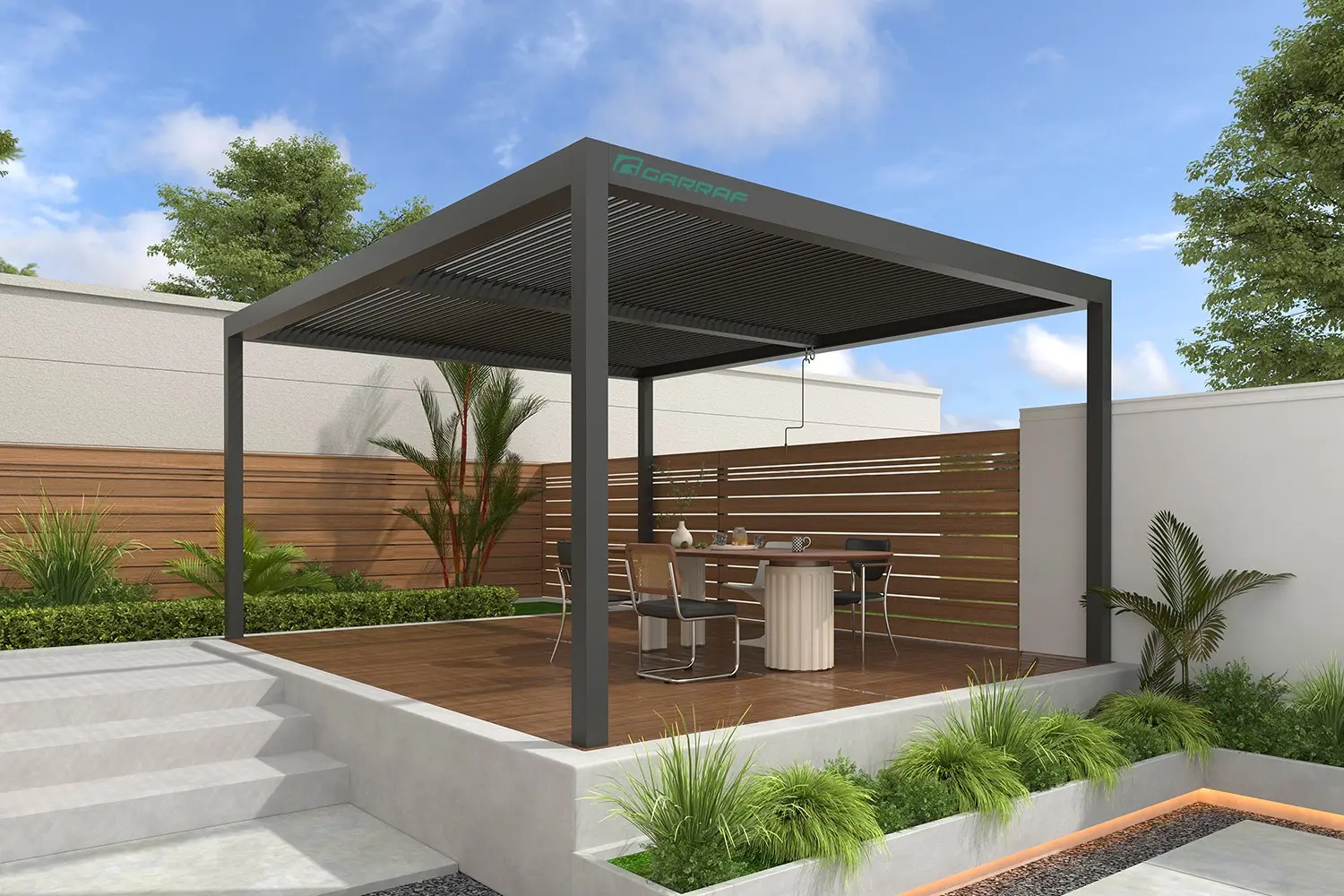
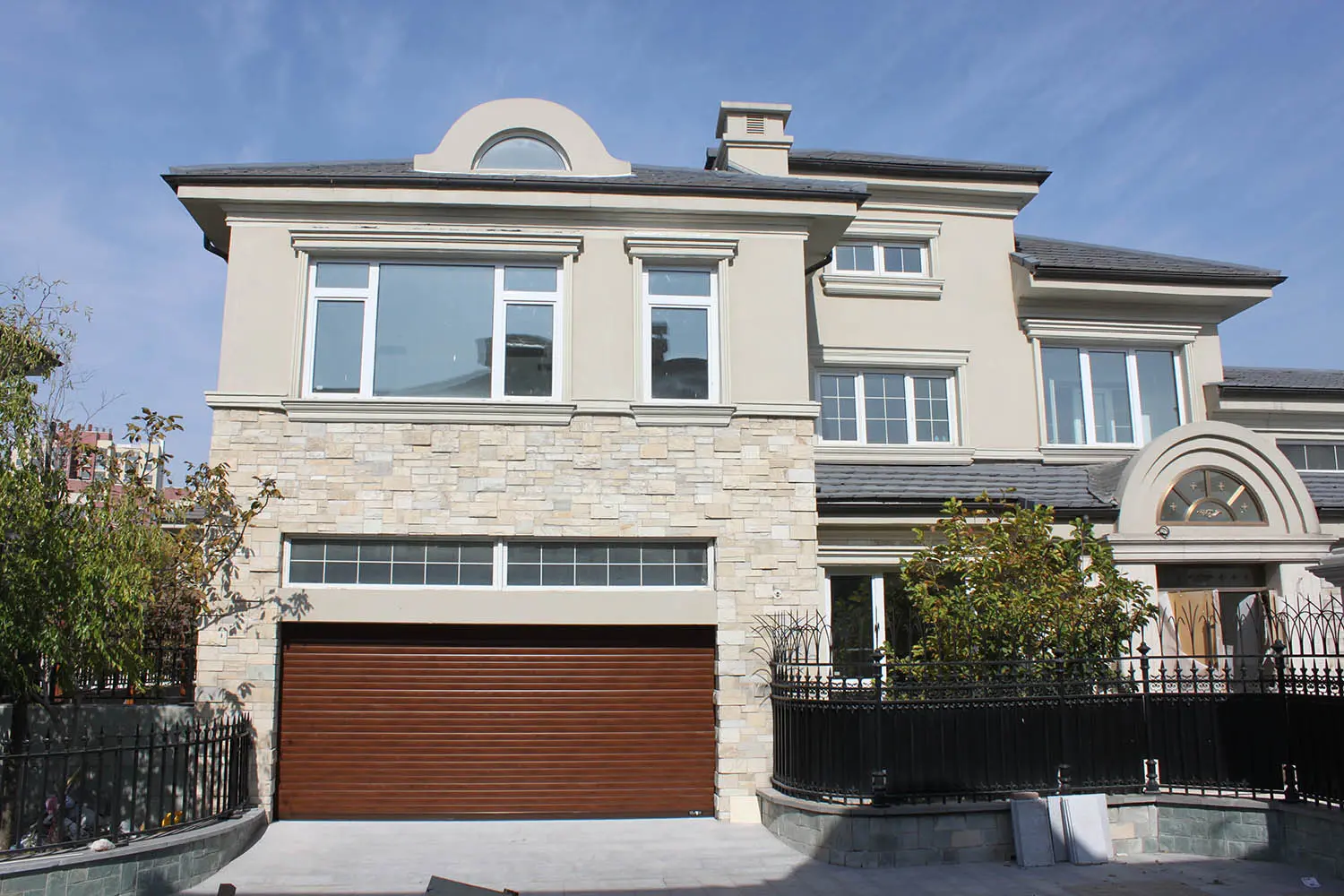
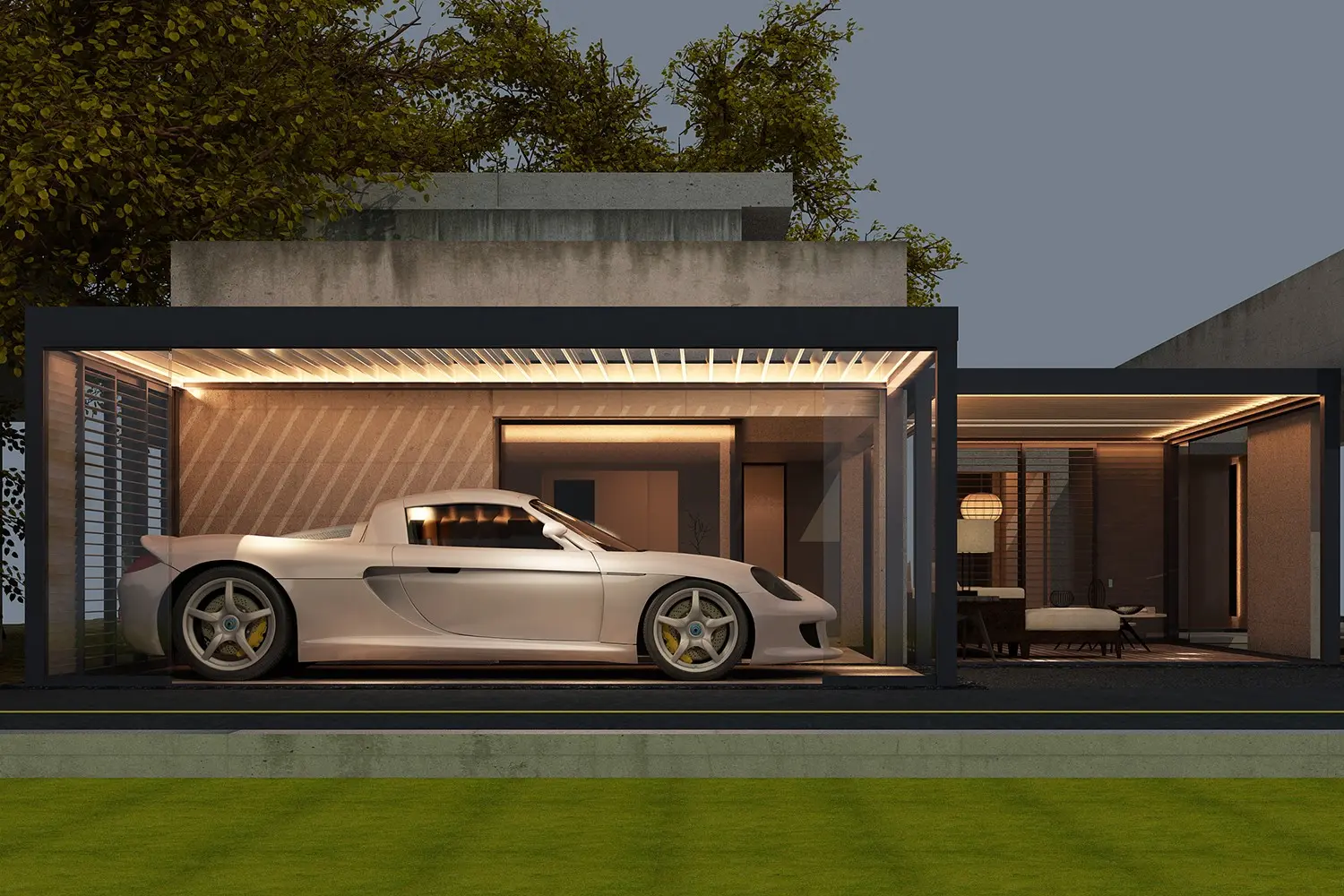
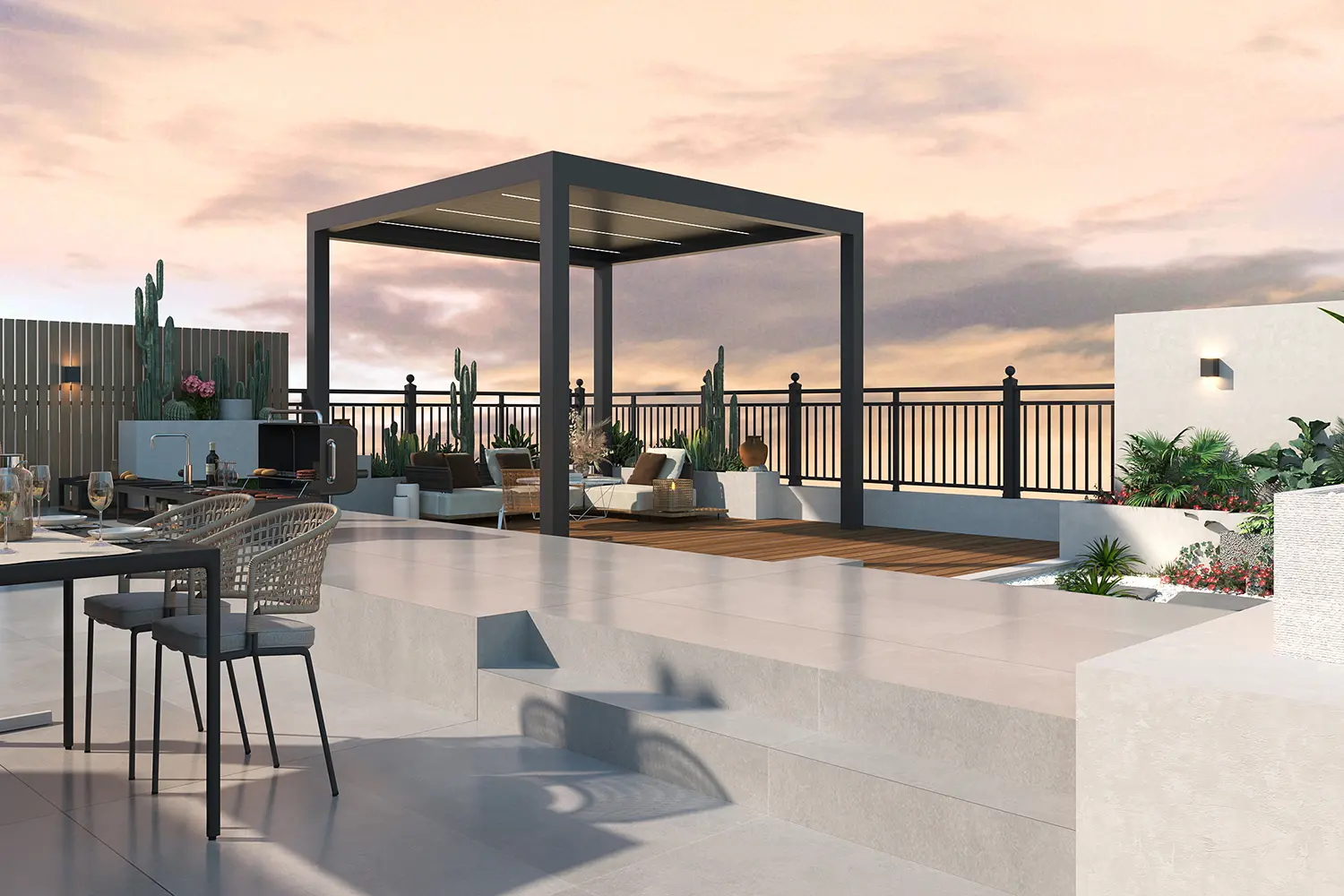
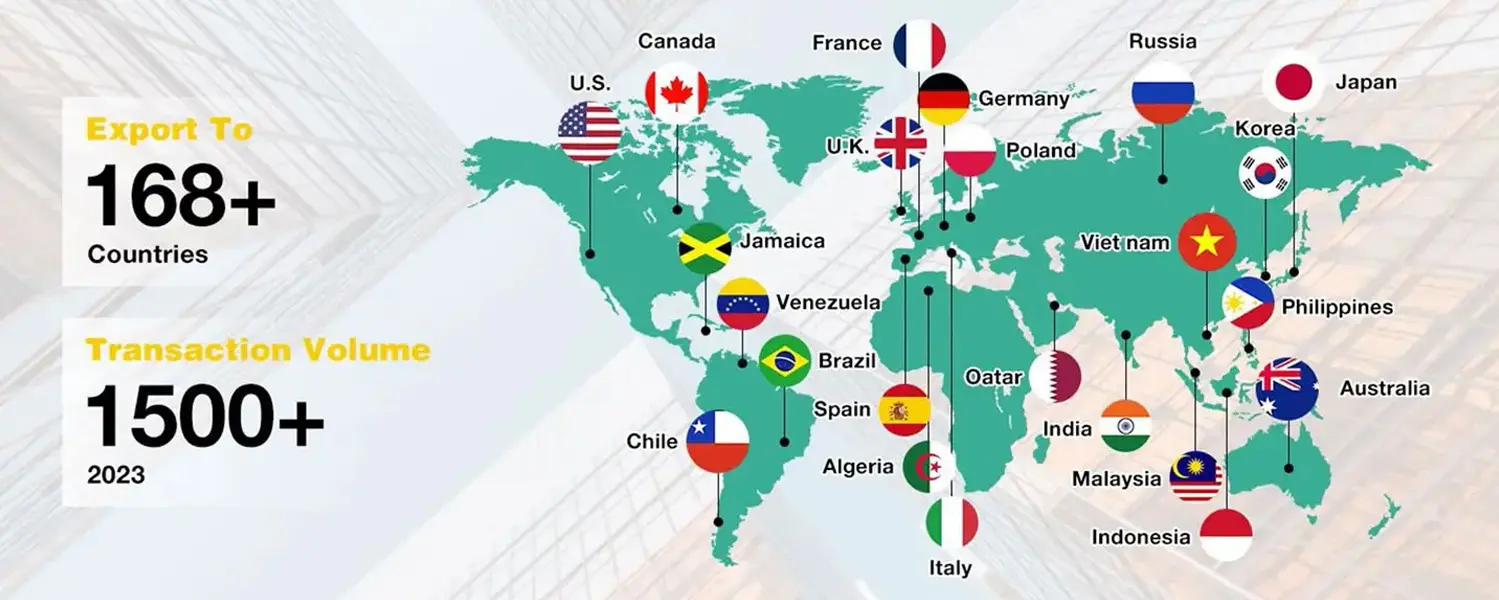
Our capacity to supply commercial developments in Osaka is backed by our global production and distribution networks. Our factories use automated extrusion lines, CNC machining centers, and automated powder coating plants to ensure consistent product dimensions and surface quality.
By managing our manufacturing and supply chain processes, we can coordinate production schedules to match construction timelines in Japan. Pergola kits are packaged, loaded into containers, and shipped directly to the ports of Osaka or Kobe, with tracking and documentation provided to assist with logistics management.
To support on-site installation, we provide detailed technical drawings, foundation layout plans, and localized installation guides. This helps construction teams and local contractors install the structures efficiently, ensuring alignment with local design requirements and project specifications.
Our production facilities maintain ISO 9001 quality systems and CE international certifications, reflecting our focus on quality control and technical compliance.
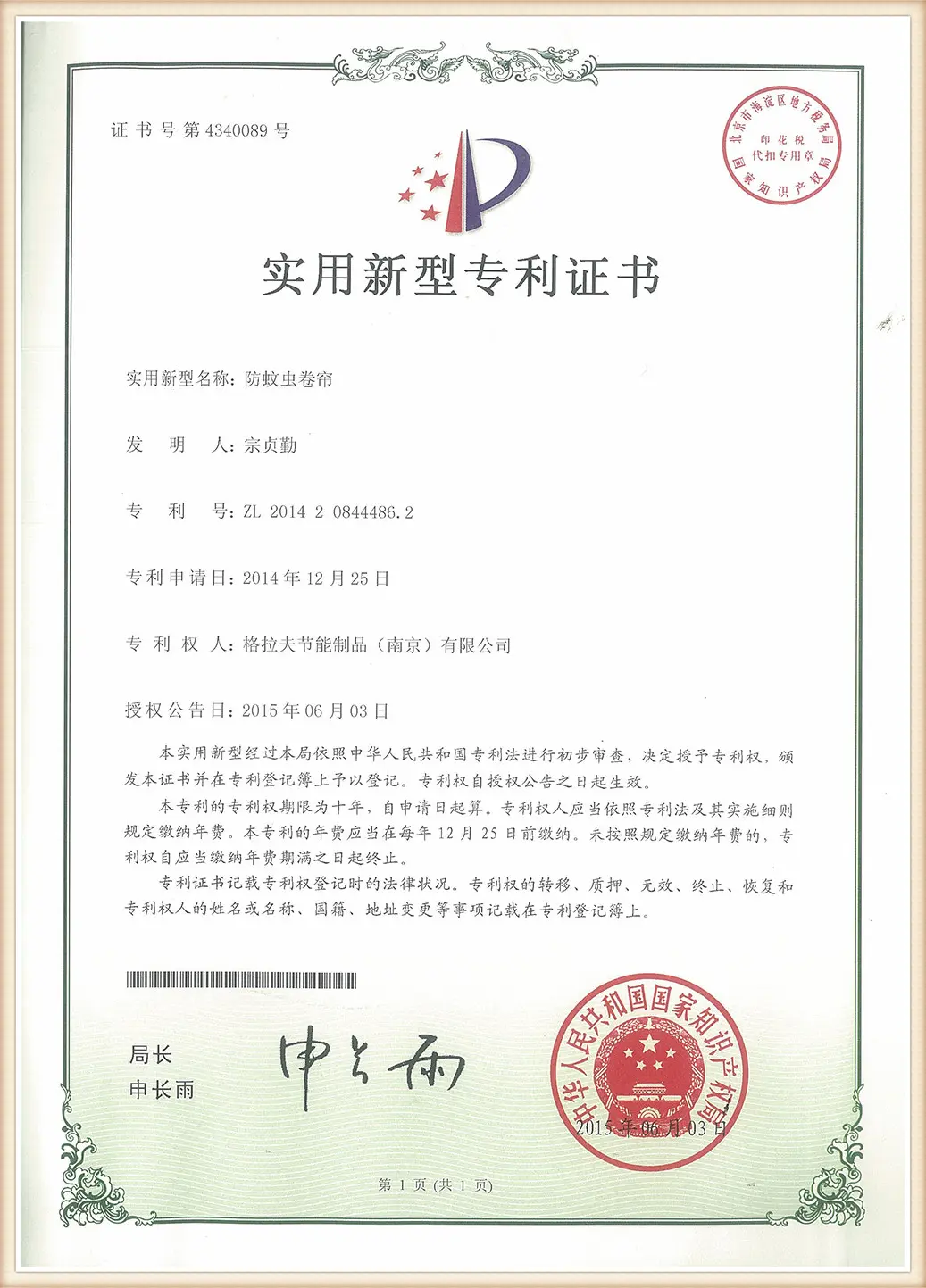
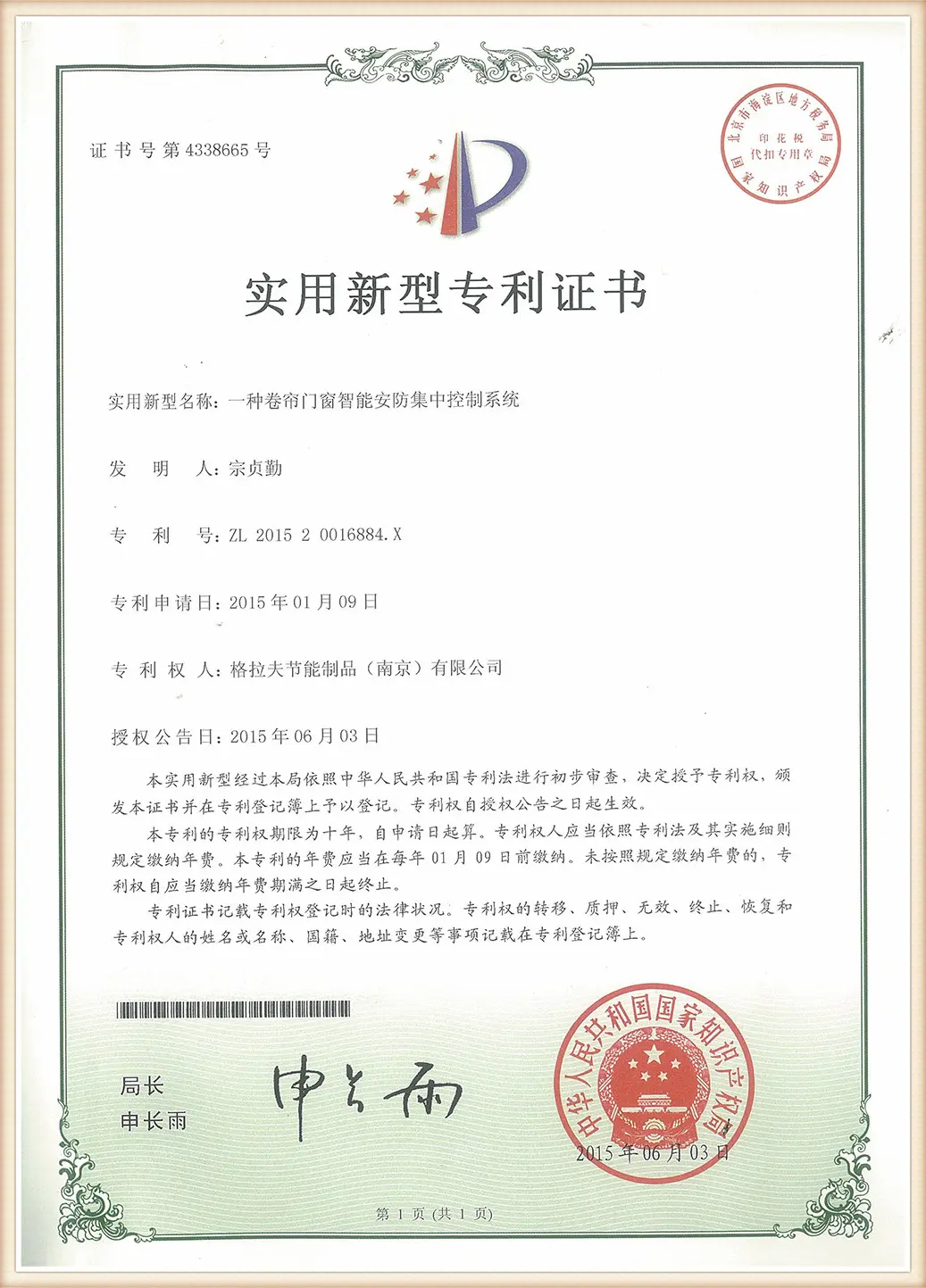
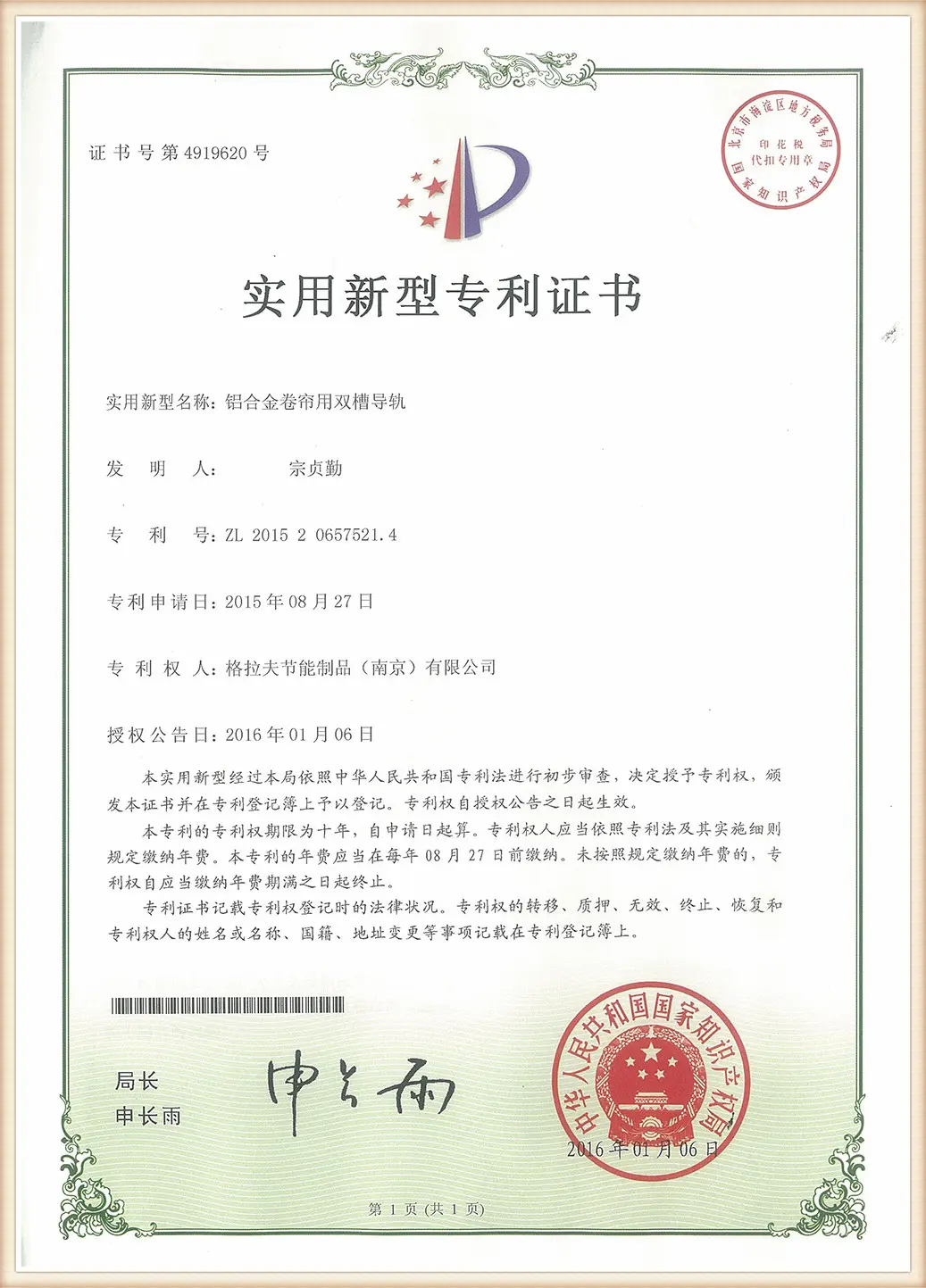
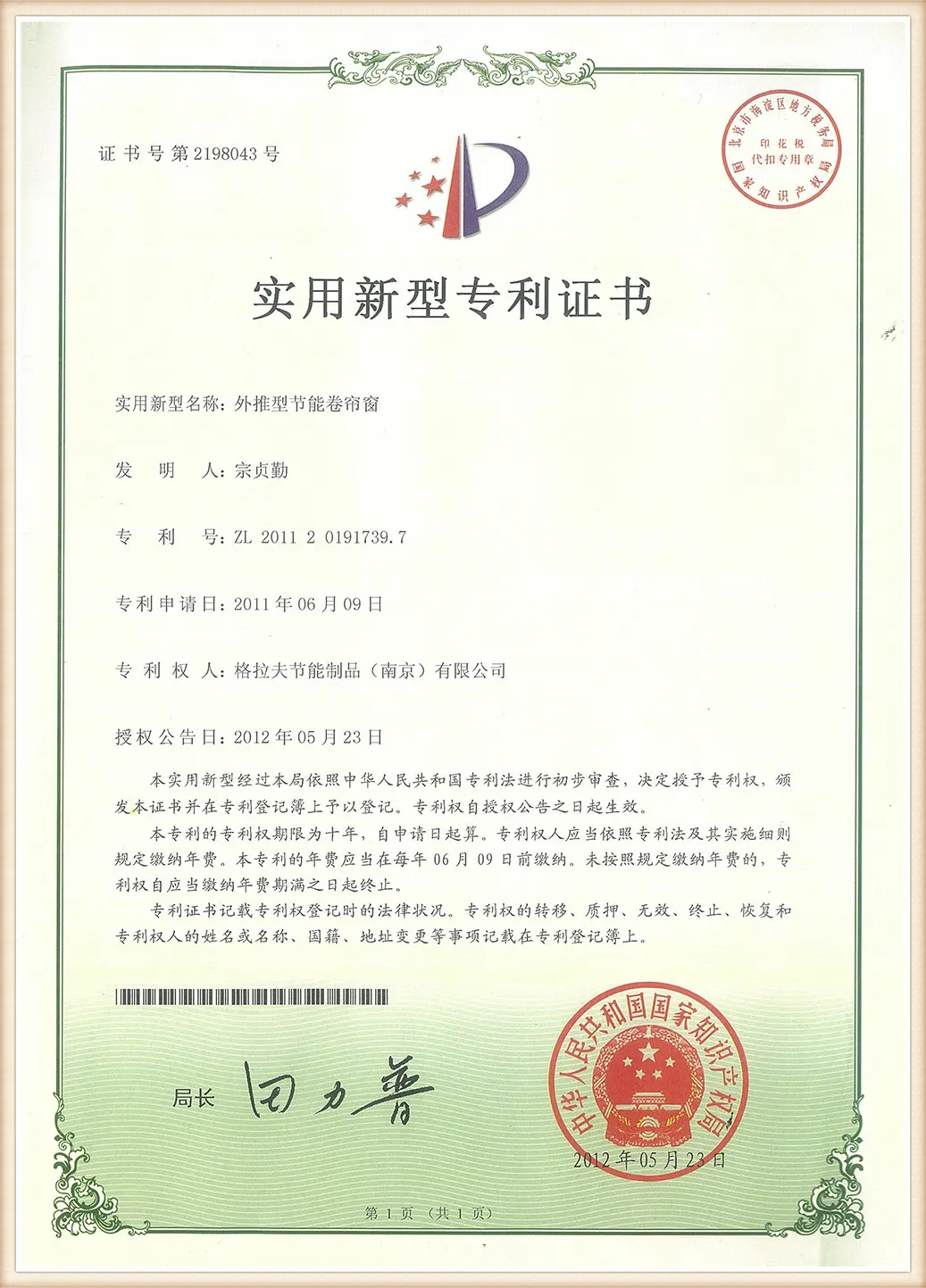
In Osaka, installing freestanding outdoor structures requires careful consideration of local building codes. Under the Japanese Building Standards Act (Kenchiku Kijun-hō), structures with solid roofs must comply with specific zoning, site coverage limits, and fire safety regulations. The structural design must also account for seismic loads, which are critical in Japan.
Freestanding pergolas with adjustable louvers are often treated differently than permanent roof extensions under local regulations, depending on the specific installation. In many residential and commercial zones in Osaka, structures under 10 square meters may have simplified approval processes, though this varies by municipality. We assist our clients by providing detailed engineering drawings, structural calculation sheets, and wind-tunnel test data to support local permit applications.
The foundation design is key to structural safety. Due to the soft alluvial soil in parts of Osaka, pergolas must be anchored to concrete foundations designed to resist wind uplift and seismic shifting. Our structural kits include reinforced steel base plates and anchors, which are secured with heavy-duty chemical anchors or cast-in-place bolts to provide structural stability.
To prevent galvanic corrosion where steel fasteners meet the aluminum frame, our systems use insulated connection pads and high-grade stainless steel hardware (such as SUS304 or SUS316). This design detail helps prevent degradation at critical load-bearing joints, maintaining structural integrity over time.
We welcome clients and procurement partners to visit our manufacturing facilities, where we demonstrate our production processes and quality control systems.
We provide structural systems and support services tailored to the requirements of architectural and construction projects.
We offer OEM & ODM customization, providing CAD layouts, custom color options, and structural spans designed for your project.
Standard structures are fabricated and finished within 20 to 30 days, helping you stay on schedule.
We coordinate secure container shipping to the Port of Osaka, managing transport to protect components during transit.
Our engineering team offers assembly documentation, load calculations, and installation support for your project.
The design of outdoor structures is evolving to incorporate smart features and solar integration. Our engineering roadmap focuses on integrating Building Integrated Photovoltaics (BIPV) with bioclimatic pergolas. This involves mounting thin-film solar modules on the louver surfaces to generate clean electricity while providing shade and weather protection.
We are also researching recycled aluminum alloys that require less energy to produce while maintaining structural performance. By selecting raw materials with lower embodied carbon, we aim to help developers meet sustainability targets and green building standards.
On-site assembly is another area of focus. We are designing modular, pre-machined connection systems that simplify installation and reduce construction time. These systems use internal connectors that hide fasteners, protecting them from weathering and maintaining clean visual lines.
We work with architects, building contractors, and material distributors globally to deliver reliable outdoor structures.


Review our latest technical publications, engineering reports, and product updates on bioclimatic structures.
Common technical questions answered by our engineering and compliance teams.
If you are an architect, contractor, or commercial developer in Osaka, contact our engineering team to discuss your project requirements, request CAD files, or receive a detailed quotation.
Send Inquiry Now GARRAF