How to Choose a White Aluminum Pergola in 2026?

Time:2026-09-25 Author:Ethan
0%

Choosing a White Aluminum Pergola in 2026 requires more than matching a patio color. It involves climate, engineering, maintenance, shade control, and long-term usability. The outdoor living market continues to expand. Grand View Research reported strong growth in the global outdoor living products market, driven by rising residential investment and demand for functional exterior spaces. Houzz’s 2024 U.S. Outdoor Trends Study also found that homeowners increasingly improve outdoor areas for relaxation, dining, and entertaining. These findings suggest a pergola is becoming an everyday room, not merely a decorative frame.

Landscape designer Jamie Durie has described outdoor rooms as “an extension of the home.” That idea matters when evaluating a White Aluminum Pergola. Look closely at the details. A powder-coated white finish should resist chalking and discoloration under intense sunlight. Adjustable louvers should open smoothly, close tightly, and manage rain without creating dripping edges near seating. Strong anchoring is equally important, especially in coastal or windy locations. Ask for wind-load information, coating specifications, drainage details, and warranty limitations.

White is attractive, but it is not always effortless. Dust, pollen, and water marks can appear quickly on bright surfaces. Aluminum also feels colder than timber during winter evenings. A careful buyer should consider these weaknesses before choosing a showroom-perfect model. This guide will compare frame thickness, louver systems, lighting, installation quality, cleaning needs, and total ownership cost. The right pergola should look refined at noon and remain practical after years of weather exposure.
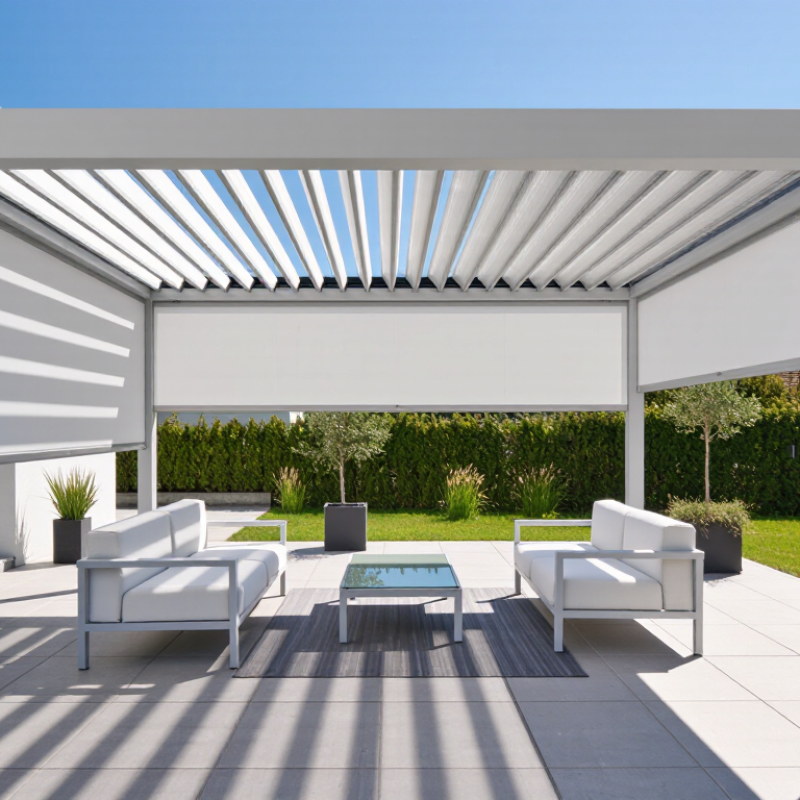
How to Choose a White Aluminum Pergola in 2026?

Define Your Pergola’s Purpose, Space, and Installation Site

Before choosing a white aluminum pergola, decide whether it will shade a dining table, shelter a reading chair, or define an outdoor walkway. Measure the furniture with chairs pulled out, not pushed in. A narrow plan can look roomy on paper. It may feel cramped once people gather. White reflects daylight, which can keep a covered patio feeling bright, but nearby windows may catch glare.

Check the site at different times of day. The U.S. Environmental Protection Agency’s Heat Island Effect report says urban areas can be 1–7°F warmer than nearby rural areas during the day. That makes afternoon shade valuable, but a pergola’s open roof will not block all heat or rain. Note the sun’s direction, prevailing wind, drainage slope, and any doors or windows the structure could obstruct. Measure twice.

Installation conditions matter as much as appearance. Identify buried utilities before digging, and confirm that the surface can support the planned footings. ASCE/SEI 7-22 sets out site-specific design loads, including wind and snow; ask a qualified installer how local conditions affect anchoring and beam sizing. A level patio is not automatically a suitable foundation. It is easy to overlook that. Keep access for maintenance, and check applicable local requirements before fixing the final position.

Compare Aluminum Grades, Finishes, and White Color Options

A white aluminum pergola is not defined by color alone. Ask for the alloy and temper, such as 6063-T5, plus the wall thickness and engineering details. Alloy labels matter, but they do not prove a complete structure is suitable for your span, wind exposure, or snow load. A mill certificate and project-specific load information are more useful than a sales description. Check the finish specification too: AAMA 2604 and 2605 identify different levels of coating performance testing. The higher designation can be worth considering in harsh sun or coastal air, but neither removes the need for cleaning.

White has several personalities. A cool, bright white can look crisp beside gray paving, while a warmer white may sit more naturally with wood. Compare physical samples outdoors; screens distort undertones. Gloss can highlight dust and surface marks, while a low-sheen finish often looks calmer. White is not maintenance-free. The U.S. Department of Energy’s Energy Saver guidance says white roofs can reflect about 60–90% of sunlight, but that range describes roofs, not open pergola slats. Slat spacing, angle, and shade patterns change the result. Check the actual coating’s color and reflectance data, then view a sample in morning and afternoon light. That small test can prevent an expensive mismatch.

Choose the Right Roof Style, Size, and Shade Performance

How to Choose a White Aluminum Pergola in 2026?

Choose the Right Roof Style, Size, and Shade Performance

Start with the way you use the space. A dining table needs different coverage from two lounge chairs. Measure the furniture, then leave room to pull out seats and walk around them. A pergola that fits on paper can still feel cramped.

Roof style affects both shade and upkeep. Adjustable louvers let you change sunlight throughout the day, but their performance depends on the sun’s angle. Fixed panels provide steadier cover, though they can make a patio feel darker. Check how rain drains, too. Water should not spill onto the main seating area.

Shade is never quite as simple as a product photo suggests. The sun moves, nearby walls reflect light, and seasonal changes matter. Sketch the pergola’s position at several times of day, or observe the patio before choosing. Small step.

White finishes can brighten a space, but dust and pollen may show more clearly. Ask about cleaning instructions and finish care, and inspect samples outdoors; indoor lighting can mislead. There may be no perfect roof style. Choose the trade-offs you can live with.

Evaluate Weather Resistance, Maintenance, and Structural Strength

When choosing a white aluminum pergola, assess the coating and frame separately. White surfaces show dust, pollen, and water marks more readily than darker finishes. Ask whether the powder-coated finish is rated for outdoor exposure, and inspect sample corners for thin coverage or chips. Salt air, strong sun, and freeze-thaw cycles can challenge even a sound finish. Small details matter.

Maintenance should be simple enough to repeat. Wash the frame with mild soap and water, then clear leaves from gutters and moving louvers. Check fasteners, joints, and post bases each season, especially after hard storms.

Do not judge strength by beam thickness alone. Request documented wind and snow-load capacities for your region and exact configuration; changing spans or adding screens can alter loads. Check the joints. Confirm that posts can be anchored to your actual slab or footing, not just a display surface. I would be cautious about glossy appearance claims; coating quality and sound installation matter more.

Check Features, Safety Standards, Warranty, and Total Cost

A white aluminum pergola should be judged by its structure, finish, and paperwork—not appearance alone. Check the alloy and post dimensions, fastener material, drainage design, and powder-coat specification. AAMA 2604 and 2605 describe performance requirements for architectural coatings; ask which level the finish meets and how it was tested. White surfaces show dirt and chalking readily. Still, a smooth sample can hide weak coating performance.

For safety, request project-specific wind and snow-load information, including the required anchoring and footing details. ASCE 7-22 provides design loads used by structural professionals; a generic “wind rated” claim is not enough. Confirm that installation follows local permit requirements, and have a qualified professional review unusual exposure or large spans. The Aluminum Association reports that recycled aluminum uses about 95% less energy than primary aluminum production, but recycled content alone does not prove structural quality. Ask for material documentation.

Read the warranty before comparing prices. Check coverage periods for the frame and finish, plus exclusions for fading, coastal exposure, installation, and labor. Then compare the full installed cost: delivery, footings, permits, drainage changes, and electrical work can add up. Request itemized quotes. A lower initial price may still be the wrong deal. I would leave room for maintenance costs, too; estimates are rarely perfect.

How to Choose a White Aluminum Pergola in 2026? — Check Features, Safety Standards, Warranty, and Total Cost
Check Area What to Look For Questions to Verify Why It Matters
Size and layout Measure the usable patio area, door and window clearances, drainage paths, and the planned post locations. Confirm whether the structure is freestanding or attached to the home. Are the listed dimensions the outside dimensions or the usable area between posts? Does the design leave adequate access and comply with local setback rules? Accurate measurements help prevent blocked access and unexpected changes to the foundation or installation plan.
Roof style Choose between a fixed roof, adjustable louvers, or a retractable canopy. Adjustable louvers provide control over sun and ventilation; they are not necessarily watertight when open. When closed, is the roof designed to shed rain? How is water collected and directed away? Can the louvers be operated manually during a power outage? Roof type affects comfort, maintenance, drainage, operating requirements, and overall price.
Aluminum frame Review the alloy and temper, post and beam dimensions, connection details, and published structural design limits. Compare complete structural documentation rather than relying on a single “heavy-duty” label. Are engineering documents available for the specific size and configuration? Are the fasteners and connectors suitable for the installation environment? Frame strength depends on the entire engineered assembly, its connections, span, anchoring, and site conditions.
White finish Check the finish type, surface preparation, color consistency, and care instructions. Ask for written coating specifications and any applicable coating test or performance documentation. Is the finish intended for exterior exposure? What cleaning products are permitted, and how are scratches or chips handled? A suitable exterior finish helps the white surface retain its appearance; dirt, pollutants, and weather can still require periodic cleaning.
Wind and snow safety Obtain project-specific design information for local wind and snow conditions. Building officials may reference locally adopted building codes and structural-load standards such as ASCE 7. Are the design wind speed, exposure assumptions, roof configuration, and snow-load limits stated? Has the proposed installation been reviewed for the property’s location? Loads vary by location, terrain, height, roof position, and configuration. A general product rating may not establish suitability for a particular site.
Anchoring and permits Confirm the required footing, slab, or other foundation details and the specified anchor type. Check permit and setback requirements with the local building department before ordering. Can the existing slab support the installation? Are footing dimensions and anchor spacing documented? Who is responsible for permits and inspections? Secure anchoring and code compliance are essential to the structure’s stability; an existing patio slab should not be assumed adequate without review.
Motorized components For motorized louvers, check the power supply, controls, manual operation options, and outdoor electrical installation requirements. Who installs and connects the electrical equipment? Does the work comply with locally adopted electrical codes, including applicable outdoor-circuit and GFCI requirements? Electrical requirements depend on the site and local code. Use appropriately qualified electrical contractors where required.
Warranty Compare separate written coverage for the frame, finish, roof mechanisms, motor, and installation. Coverage periods and exclusions differ between products and sellers. What is the duration for each component? Are labor, shipping, corrosion, fading, wind or snow damage, and coastal exposure covered or excluded? Is registration required? A single headline warranty period may not apply to every part or cover labor and removal costs. Read the complete terms before purchase.
Maintenance and service Ask about cleaning, louver or track inspection, drainage-channel maintenance, replacement parts, and access to service after installation. Are routine maintenance instructions and replacement-part availability provided in writing? Regular care can help keep moving parts and drainage paths functioning; maintenance needs depend on the design and local conditions.
Installed cost: fixed-roof example Illustrative early-planning range for a roughly 10 ft × 12 ft structure: about US$6,000–$15,000 installed. Request an itemized quote covering the frame, roof, delivery, labor, anchoring, and any required foundation or permit work. Indicative budgeting only, not a market quotation. Actual pricing varies by region, design, site access, materials, and contractor scope.
Installed cost: adjustable-louver example Illustrative early-planning range for a roughly 10 ft × 12 ft motorized louvered structure: about US$12,000–$30,000+ installed. Confirm whether the price includes motors, controls, electrical work, rain-management components, foundation work, delivery, and permits. Indicative budgeting only. Larger spans, engineering, electrical work, difficult access, and premium options can increase the total.
Total-cost calculation Total project cost = pergola and options + delivery + foundation and anchoring + installation + electrical work + permits or engineering + applicable taxes. Ask for a written, itemized quote and identify exclusions, potential site-work charges, payment schedule, and change-order terms. Comparing complete installed costs provides a more useful basis for choosing than comparing product-only prices.
Final selection check Compare at least two itemized proposals with matching dimensions, roof type, finish, structural documentation, warranty terms, and installation scope. Can the seller or installer provide the specifications, safety information, warranty documents, and a clear list of included and excluded work? A documented comparison helps balance appearance, functionality, safety, warranty protection, and total cost.

FAQS

Which aluminum details should I check before choosing a white pergola?

Ask for the alloy, temper, wall thickness, and project-specific structural information. A label alone cannot confirm suitability for your span, wind exposure, or snow load. Request material documentation and load details.

What do AAMA 2604 and 2605 tell me about the finish?

They identify different levels of coating performance testing. Ask which level the finish meets and how it was tested. Neither rating removes the need for regular cleaning.

How can I choose the right shade of white?

Compare physical samples outdoors. Screens can distort undertones. Check the sample beside your paving or wood, in morning and afternoon light.

Does a white pergola roof reflect as much sunlight as a white roof?

Not necessarily. Roof reflectance figures do not directly describe open pergola slats. Slat spacing, angle, and nearby shade all change the result. Ask for data on the actual coating.

How do I select the pergola’s size and roof style?

Measure your furniture and leave space to pull out chairs and walk around. Adjustable louvers change sunlight, while fixed panels provide steadier cover but may darken the patio.

What should I check about drainage and shade?

Check where rainwater flows so it does not spill onto the main seating area. Observe the patio at different times; walls and seasonal sun can alter shade.

What safety information should I request?

Request project-specific wind and snow-load information, including anchoring and footing details. A generic wind rating is not enough. Have a qualified professional review unusual exposure or large spans.

What should I compare when reviewing warranties and prices?

Check frame and finish coverage, exclusions, and labor terms. Compare itemized installed costs, including delivery, footings, permits, drainage changes, and electrical work. Leave room for maintenance; estimates are rarely perfect.

Conclusion

Choosing a White Aluminum Pergola in 2026 starts with understanding how you plan to use it, where it will be installed, and how much space is available. Consider whether you need a comfortable outdoor dining area, a shaded lounge, or a flexible extension of your living space. Compare aluminum grades, protective finishes, and white color options to find a structure that offers durability, attractive appearance, and resistance to fading or corrosion.

Next, select a roof style, size, and shading performance that match your climate and daily needs. Evaluate resistance to wind, rain, sun, and changing temperatures, along with maintenance requirements and overall structural strength. Practical features such as adjustable louvers, drainage systems, lighting compatibility, and secure installation can improve usability and safety. Before making a decision, review applicable safety standards, warranty coverage, installation support, and the total cost, including accessories and long-term upkeep. A well-planned White Aluminum Pergola should provide lasting comfort, reliable protection, and value for your outdoor space.


Ethan

Ethan

Ethan is a seasoned marketing professional with a deep expertise in our company's innovative product line. With a passion for sharing knowledge and insights, he takes the lead in regularly updating our corporate blog, where he explores industry trends, product features, and effective marketing......