What Are the 2026 Best Aluminium Gazebo Kits?

Time:2026-10-10 Author:Oliver
0%

Choosing the 2026 best Aluminium Gazebo Kits requires more than comparing roof shapes and advertised prices. Buyers need evidence about structural strength, corrosion resistance, installation quality, and long-term maintenance. Industry reports provide useful direction, although they do not always classify aluminium gazebos as a separate product category.

Grand View Research’s outdoor furniture market analysis highlights continued consumer interest in durable outdoor living products and weather-resistant materials. The Freedonia Group’s research on outdoor living products also shows how homeowners increasingly invest in covered spaces for dining, entertaining, and year-round use. These findings support aluminium’s appeal. It is lightweight, recyclable, and usually less demanding than timber in wet climates. However, aluminium quality varies greatly. Thin profiles can flex, while weak powder coatings may fade or peel after repeated sun exposure.

This guide examines Aluminium Gazebo Kits through practical and technical criteria. We will compare aluminium alloy grades, roof systems, drainage channels, adjustable louvers, anchoring methods, and stated wind or snow-load ratings. Installation clarity matters too. A beautifully engineered frame can still fail when instructions are vague or ground preparation is ignored. Check the warranty carefully.

No kit is perfect.

Reported market data should be read cautiously because regional definitions, climate conditions, and product categories differ. A gazebo suitable for a sheltered British garden may not withstand coastal wind or heavy alpine snow. The strongest choice combines verified specifications, credible testing, replacement-part availability, and realistic maintenance expectations. This 2026 comparison aims to separate useful engineering from attractive marketing, while acknowledging that some recommendations may need revision as manufacturers publish updated performance data.
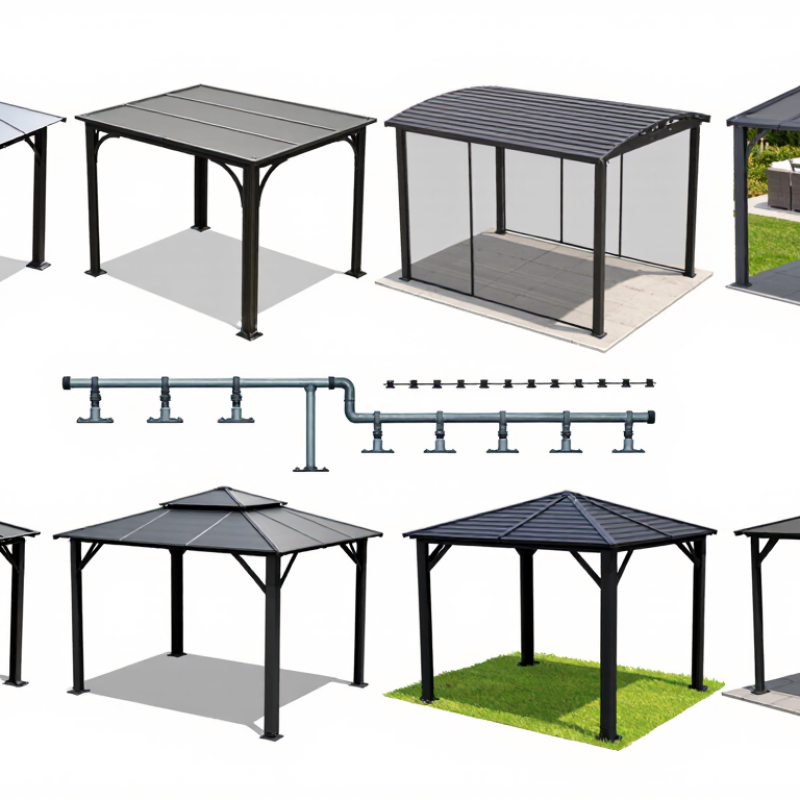
What Are the 2026 Best Aluminium Gazebo Kits?

What Defines the Best Aluminium Gazebo Kits in 2026?

What Defines the Best Aluminium Gazebo Kits in 2026?

The best aluminium gazebo kits combine dependable structure, practical design, and clear installation guidance. Aluminium should resist rust, but coatings still matter in coastal or humid locations. Look for powder-coated frames with even coverage and protected joints. Strong corner connections reduce movement during wind. However, a heavy frame alone does not guarantee safety. Proper anchoring remains essential.

Roof design also separates ordinary kits from better ones. A sloped roof should guide rain toward controlled drainage points, not walking areas. Double-layer panels can reduce heat and soften rainfall noise. Adjustable louvers offer useful ventilation, although moving parts need regular cleaning. Check the stated wind rating carefully. Real conditions may exceed laboratory assumptions.

Tips: Measure the ground twice before ordering. Leave space for doors, chairs, and drainage. Inspect bolts after the first storm. Use level paving where possible. Do not rely on weight alone.

Installation experience often reveals small weaknesses. Some instructions appear clear but skip uneven-ground problems. That is frustrating. A reliable kit should include labelled parts, realistic tools, and replacement hardware. Buyers should also check warranty terms, maintenance needs, and local installation requirements. The best 2026 option is not always the largest model. It is the one that suits the site, climate, and daily use without creating avoidable repair work.

Key Features to Compare in Aluminium Gazebo Kits

The best aluminium gazebo kits in 2026 should be judged by structure, not appearance alone. A rigid aluminium frame should feel stable when light wind moves across the garden. Check the alloy thickness, corner joints, and connection method. Thin posts may look elegant, yet they can flex under repeated weather exposure. Powder-coated surfaces resist fading and corrosion, but coating quality still varies. Inspect the finish for even coverage, sharp edges, and exposed metal.

Roof design deserves close attention. Adjustable louvres provide useful control over sunlight and ventilation. Sealed panels offer stronger rain protection but can make summer spaces warmer. Look for integrated gutters and downpipes that guide water away from seating areas. During a practical inspection, pour water across the roof and watch where it drains. It is a simple test. Some kits advertise drainage features, but the outlet position may be inconvenient.

Installation details often decide long-term performance. Compare the included anchors, base plates, screws, and adjustment options. A kit should suit concrete, paving, or another stable foundation, with clear instructions and accurate diagrams. Check the stated wind and snow-load ratings against local conditions, rather than trusting general claims. Maintenance should be realistic: occasional washing, bolt checks, and inspection after storms. I have found that small hardware can loosen sooner than expected. That is not necessarily a design failure, but ignoring it creates avoidable movement and noise. Evaluate replacement-part access, warranty terms, and technical support before choosing a larger structure.

What Are the 2026 Best Aluminium Gazebo Kits? - Key Features to Compare in Aluminium Gazebo Kits

Comparison Dimension Compact Entry Kit All-Season Mid-Range Kit Premium Louvered Kit Large Entertaining Kit What to Check Before Buying
Typical footprint 3 m × 3 m
Approximately 9 m²
3 m × 4 m
Approximately 12 m²
3 m × 4 m
Approximately 12 m²
4 m × 6 m
Approximately 24 m²
Measure the available area, including roof overhangs, access paths, and required clearance from walls or property boundaries.
Primary frame material Powder-coated aluminium posts and beams Powder-coated aluminium posts and reinforced beams Aluminium posts, beams, and adjustable louver blades Reinforced aluminium posts and multi-span beams Look for corrosion-resistant aluminium and a durable powder-coated finish. Confirm the alloy and coating specification in the technical sheet.
Common post size Approximately 90 × 90 mm Approximately 100 × 100 mm Approximately 120 × 120 mm Approximately 120 × 120 mm or larger Larger posts generally improve rigidity, but structural performance also depends on beam design, fixings, span, and foundations.
Roof construction Fixed aluminium roof or polycarbonate panels Fixed insulated aluminium panels or polycarbonate panels Rotating aluminium louvers with integrated drainage Fixed insulated panels, louvers, or a combination of both Compare thermal comfort, daylight, drainage, noise during rain, and whether replacement roof panels are available.
Ventilation control Natural ventilation through open sides Open sides with optional curtains or screens Adjustable louvers provide controlled airflow and shade Optional screens, curtains, sliding panels, or louver sections Adjustable louvers offer more control, but they add moving parts that require correct installation and periodic inspection.
Rainwater management Basic roof edge or external gutter option Integrated or attachable gutter system Gutters inside the frame with downspouts through the posts Multiple gutter channels and downspout locations Check gutter capacity, outlet positions, cleaning access, and whether downspouts can connect to suitable drainage.
Wind-resistance information Often specified by the installer or local supplier Should include a tested or engineered wind rating Should include engineering data for louvers, anchors, and closed-roof conditions Requires site-specific structural review in exposed locations Do not compare wind ratings without checking the test method, unit system, anchoring method, roof position, and local building requirements.
Snow-load information Suitable only where the published load rating matches local conditions Designed for moderate snow conditions when supported by documentation Requires special attention because open louvers may not be rated for accumulated snow Should be structurally engineered for the larger roof span and local snow load Snow load is site-specific. Confirm the allowable load in kPa or kN/m² and follow local requirements for snow removal.
Foundation and anchoring Concrete slab or suitable solid masonry with expansion anchors Concrete slab, reinforced pad, or engineered footings Engineered anchors and a level, load-bearing base are strongly recommended Reinforced slab or individually designed footings may be required Verify substrate thickness, anchor type, edge distances, drainage, and resistance to uplift before installation.
Shade performance Basic fixed shade; depends on roof material Good fixed shade with optional privacy panels High potential, but performance varies by roof layout and orientation Solar protection depends on roof orientation, louver angle, surrounding buildings, and seasonal sun position.
Privacy and insect protection Usually optional curtains or mesh screens Optional zip screens, curtains, or side panels Optional integrated screens or sliding glass-style panels Multiple enclosure options, usually at additional cost Check screen mesh quality, zipper or track design, ventilation, attachment points, and replacement availability.
Maintenance requirements Low; clean frame and inspect anchors periodically Low to moderate; clean roof, gutters, and fasteners Moderate; clean louvers, inspect pivots, seals, motors, and drainage Moderate to high because of the larger roof and additional accessories Choose stainless or corrosion-resistant fasteners and ensure that moving components can be accessed for servicing.
Motorized operation Not usually included Optional in selected configurations Available for louvered sections and some screens Confirm electrical rating, weather protection, manual override, drainage around motors, and replacement-part support.
Assembly difficulty Moderate; commonly suited to experienced DIY installers Moderate to high; two or more people are normally needed High; precise alignment is important for louvers and drainage High; professional installation is often advisable Compare the number of installers required, estimated labor time, tool requirements, and whether site leveling is included.
Warranty areas to compare Frame finish, structure, and roof panels Frame, coating, roof, gutters, and accessories Frame, louvers, motors, controls, seals, and finish Structural frame, roof system, drainage, and optional enclosures Read exclusions, installation conditions, coastal-use limitations, maintenance obligations, and the process for replacement parts.
Best suited to Small patios, balconies with suitable structural support, and compact seating areas Family dining, outdoor cooking, and general year-round patio use Large dining areas, outdoor kitchens, and entertaining spaces Base the choice on climate, intended use, available space, installation surface, and the level of weather protection required.

Note: The specifications shown are representative comparison ranges for aluminium gazebo kit configurations, not guarantees for every product. Confirm the exact structural ratings, dimensions, certification, installation method, and local permit requirements in the supplier’s current technical documentation before purchase.

Top Aluminium Gazebo Kit Types for Different Outdoor Spaces

What Are the 2026 Best Aluminium Gazebo Kits?

The best aluminium gazebo kit depends on the outdoor space, not only its appearance. Compact wall-mounted kits suit narrow patios, balconies, and small terraces. They preserve walking space while creating shade near a dining door. Measure twice. A few centimetres can affect drainage, door clearance, and installation access.

For medium patios, freestanding aluminium gazebos offer flexible placement and easier furniture rearrangement. Fixed-roof models provide dependable shelter from sun and light rain. Adjustable louvered roofs allow users to control airflow and daylight. They are useful beside outdoor kitchens, seating areas, or hot tubs. However, moving louvers contain more components and need careful alignment during assembly. That detail is easy to underestimate.

Large gardens benefit from modular kits with wider spans, integrated gutters, and optional privacy screens. These features help divide a lawn into practical zones without building a permanent room. In coastal areas, powder-coated aluminium and corrosion-resistant fasteners deserve close attention.

For windy locations, check the tested wind rating, anchoring method, and foundation requirements. Do not rely on weight alone. A heavy structure can still shift if its posts are poorly secured. Local planning and safety requirements should also be reviewed before installation.

My main reservation is that attractive kits often hide difficult assembly steps. Read the manual first, inspect every connector, and allow extra time for leveling.

How to Choose the Right Size, Roof, and Enclosure Options

Choosing the best aluminium gazebo kit for 2026 starts with measurements, not appearance. Grand View Research estimates the outdoor living products market will grow at about 5.8% annually through 2030. That growth brings more choices, but also more confusing specifications. Measure the usable patio area, then leave at least 60 centimetres around posts and roof edges for movement and maintenance. A 3 × 3 metre kit suits compact seating. A 4 × 6 metre structure works better for dining, storage, and circulation.

Roof design should match local weather. A double-slope roof sheds rain efficiently, while a louvred roof offers adjustable sunlight and airflow. However, moving parts need regular cleaning. I once underestimated wind exposure on an open terrace. The roof felt secure, but the furniture did not. Check the manufacturer’s wind-load data and your local building requirements before installation. Do not rely only on product photographs.

Enclosure options change comfort more than many buyers expect. Sliding screens provide airflow and reduce insects, while glass panels retain warmth during cooler evenings. Choose removable panels if seasonal flexibility matters. The International Aluminium Institute states that recycled aluminium uses roughly 5% of the energy required for primary production, supporting a lower-impact material choice. Still, recycled content varies. Ask for documentation. A 2024 outdoor-living market analysis from Freedonia also identifies privacy and weather protection as major purchase factors. That sounds obvious, yet many kits offer limited side coverage. Think about afternoon sun, rain direction, and where people actually sit.

What Are the 2026 Best Aluminium Gazebo Kits?

Use the chart to compare common gazebo footprints before choosing a roof and enclosure package. Floor area is calculated from the stated dimensions, while enclosure run represents the total perimeter available for screens, curtains, or solid wall panels.

How to choose: 8 × 8 ft and 10 × 10 ft models suit compact seating areas. A 12 × 12 ft kit provides more room for dining or outdoor furniture, while a 12 × 16 ft model is better for larger entertaining spaces. Select a louvered roof for adjustable sunlight, a solid roof for stronger weather protection, and full enclosure panels when privacy or seasonal use is important.

Installation, Maintenance, Durability, and Value Considerations

What Are the 2026 Best Aluminium Gazebo Kits?

The best 2026 aluminium gazebo kits should make installation predictable, not heroic. Look for numbered parts, pre-drilled channels, adjustable feet, and clear load guidance. A level base matters more than a stylish roof. Poor alignment can create rattling panels and trapped rainwater. Powder-coated aluminium resists rust, but it is not damage-proof. Scratches near cut edges can become visible after repeated wet seasons. The International Aluminium Institute reports that aluminium recycling uses about 95% less energy than primary production. That supports long-term material value, although manufacturing and shipping still affect the full footprint.

Maintenance is simple, but regular neglect is expensive. Clean roof channels every few months, especially under trees. Rinse salt deposits from coastal frames with fresh water. Avoid abrasive pads and strong solvents. AAMA coating guidance supports using mild cleaning methods for finished aluminium surfaces. Check bolts after the first windy season, then inspect them annually. In my experience, drainage is often underestimated. A kit can remain structurally sound while its gutters quietly overflow beside a patio door. Value depends on repairable components, warranty clarity, and replaceable panels, not only the lowest purchase price.

Tips: Measure the foundation twice. Keep spare fasteners labeled in a sealed container. Photograph hidden joints before closing the roof. Ask whether replacement panels remain available. Cheap installation is tempting. It can become false economy.

FAQS

What makes an aluminium gazebo kit a strong choice in 2026?

Look for a rigid frame, protected joints, and an even powder-coated finish. Aluminium resists rust, but coating quality still matters. Anchoring is essential. Weight alone is not enough.

How should I check the frame quality?

Inspect post thickness, corner joints, base plates, and connection methods. Thin posts may flex during repeated wind exposure. Look for sharp edges or exposed metal. Small details matter.

Which roof design works best for changing weather?

Sloped roofs guide rain toward planned drainage points. Double-layer panels can reduce heat and rainfall noise. Adjustable louvers improve airflow but need cleaning. There is no perfect roof.

How can I test the gazebo’s drainage?

Pour water across the roof before regular use. Watch whether it reaches gutters and downpipes. Water should not fall beside chairs or doors. The outlet position may still be inconvenient.

How do I choose the correct gazebo size?

Measure the usable patio area twice. Leave about 60 centimetres around posts and roof edges. A 3 × 3 metre kit suits compact seating. Larger dining areas need more circulation space.

What should I consider before installing the kit?

Use level paving or another stable foundation. Check whether the anchors suit concrete or paving. Leave room for doors, chairs, and drainage. Uneven ground can expose weak instructions.

Are screens or glass panels useful additions?

Sliding screens improve airflow and reduce insects. Glass panels retain warmth during cooler evenings. Removable panels offer seasonal flexibility. Side coverage matters more than many photos suggest.

What maintenance does an aluminium gazebo require?

Wash the frame occasionally and inspect bolts after storms. Louvers need extra cleaning around moving joints. Replacement hardware should be available. I underestimated how quickly small bolts could loosen.

Should I trust the listed wind and snow ratings?

Treat ratings as useful guidance, not a guarantee. Compare them with local weather and installation requirements. Real conditions may exceed test assumptions. Ask questions before ordering.

Is recycled aluminium always the better option?

Recycled aluminium generally uses less production energy. However, recycled content can vary between kits. Ask for supporting documentation. A lower-impact material does not fix poor design.

Conclusion

The best Aluminium Gazebo Kits in 2026 combine strong construction, practical design, weather resistance, and long-term value. When comparing options, consider the aluminium frame quality, corrosion protection, roof structure, drainage system, ventilation, and available enclosure features such as screens, curtains, or sliding panels. A well-designed kit should provide reliable outdoor shelter while complementing the space and requiring minimal upkeep.

Different gazebo types suit different needs, from compact models for patios and balconies to larger structures for gardens, entertaining areas, or outdoor dining. Choosing the correct size depends on the available ground area, intended furniture, and clearance around the structure. Roof styles should match local weather conditions and personal preferences, while enclosure options can improve privacy and seasonal comfort. Buyers should also review installation requirements, maintenance routines, wind and rain durability, replacement-part availability, and overall cost. With careful comparison, homeowners can select an Aluminium Gazebo Kits solution that offers comfort, flexibility, and lasting performance.


Oliver

Oliver

Oliver is a seasoned marketing professional with a wealth of expertise in driving brand awareness and engagement. With a deep understanding of our company's product offerings, he consistently delivers high-quality content that enriches our professional blog. His insights not only shed light on......