What Is a 12x12 Aluminum Gazebo?

Time:2026-09-30 Author:Mason
0%

A 12x12 Aluminum Gazebo is a freestanding outdoor shelter with a nominal footprint of 144 square feet. That is enough room for a dining table, several chairs, or a compact lounge area. Actual usable space may be smaller because posts, roof supports, and furniture take room. Measure your patio carefully.

The frame is typically made from aluminum, while the roof may use metal panels, fabric, or another material. Aluminum is valued for its relatively low weight and resistance to rust, but those qualities do not make every model equally durable. Check the alloy, joint design, finish, roof construction, and anchoring method. Details matter.

The Aluminum Association reports that nearly 75% of all aluminum ever produced remains in use, reflecting the metal’s recyclability and long service history. That industry-wide figure is not a lifespan guarantee for any gazebo. Nor does it prove that a particular frame will withstand strong winds or heavy snow. A manufacturer’s load ratings, installation instructions, and warranty are more relevant to those questions. For local exposure, compare product guidance with reliable weather information, such as National Weather Service climate data. A small but important caveat: a sturdy-looking frame can still fail if it is poorly anchored. This guide explains what the dimensions mean, which materials and features to inspect, and how to judge whether this size fits your space.
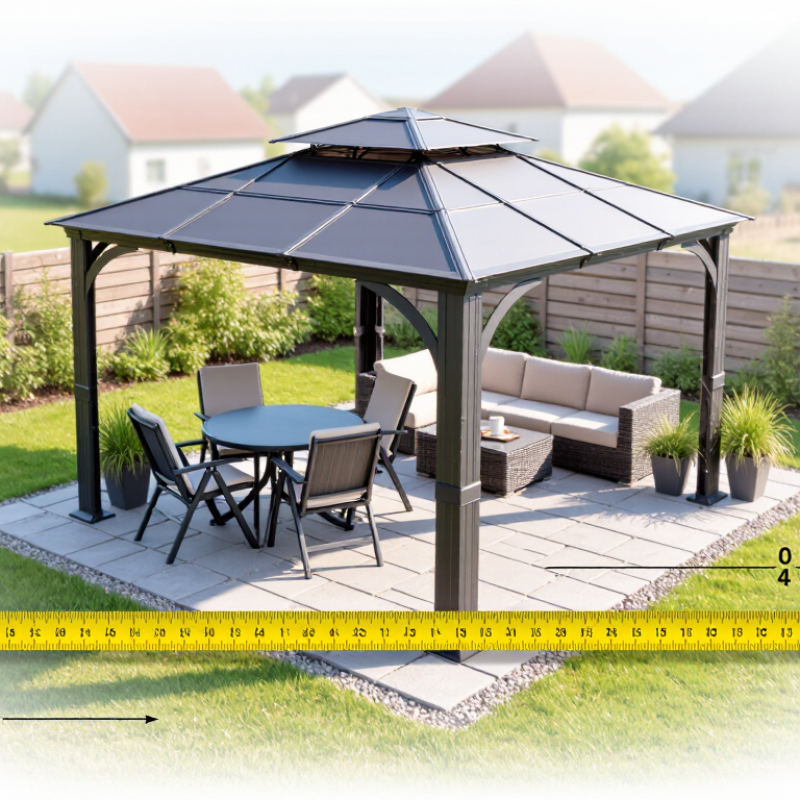
What Is a 12x12 Aluminum Gazebo?

Definition of a 12x12 Aluminum Gazebo

A 12x12 aluminum gazebo is a freestanding outdoor shelter with a nominal footprint of 12 feet by 12 feet. That equals 144 square feet. It can accommodate a dining table and chairs, but usable space shrinks where posts, furniture, and walkways take up room. The label describes the footprint, not necessarily the clear area beneath the roof. Many models use four posts supporting an aluminum frame and either solid roof panels or a fabric canopy. Check how the maker measures its dimensions. Posts may sit inside the stated width. Measure twice.

Aluminum gives the structure a relatively light frame. The Aluminum Association notes that aluminum has about one-third the density of steel; that can ease handling, but it does not guarantee stability. Anchors, joints, and local wind exposure still matter. The International Aluminium Institute reports that recycling aluminum uses about 95% less energy than producing primary aluminum. That figure applies to recycled metal, not automatically to any individual gazebo. A 12x12 label also says nothing about alloy, frame thickness, roof loading, drainage, or finish. Those details deserve a closer look. The name sounds simple, but the specifications can vary.

Standard Dimensions and Structural Features

A 12x12 aluminum gazebo is a freestanding outdoor shelter with a nominal footprint of 12 feet by 12 feet, or 144 square feet. That gives room for a small dining set, several chairs, or a sheltered seating area. The usable space is usually less than the full footprint. Corner posts, roof supports, and overhanging eaves take up room. Check the product’s actual measurements before planning furniture placement.

Its frame typically uses aluminum posts, beams, and roof supports. Aluminum resists rust, but frame strength depends on the metal thickness, joint design, and anchoring system. Roofs may use solid panels or ventilated designs, each affecting shade, airflow, and rain protection. Don’t assume the same size means the same stability. Wind and snow performance vary by model and installation conditions, so review the maker’s specifications and anchor the structure as directed. A little less interior space can be a fair trade for sturdy posts.

Tips: Measure your patio, including steps and nearby doors. Leave clearance for walking around the posts. Check local weather needs before choosing a roof style, and inspect fasteners after installation. It’s easy to overlook drainage; watch where rainwater falls before settling on the location.

Materials, Roof Styles, and Design Options

What Is a 12x12 Aluminum Gazebo?

Materials, Roof Styles, and Design Options

A 12x12 aluminum gazebo provides a 144-square-foot footprint for dining, lounging, or outdoor work. The actual usable space is smaller because posts and trim occupy part of the area. Aluminum keeps the structure relatively light and resists rust better than untreated steel. A powder-coated finish can improve surface durability and simplify cleaning. Still, scratches may expose the metal beneath. That detail deserves attention.

Roof design affects comfort, drainage, and visual weight. A single-slope roof offers a clean, modern profile and directs rain toward one side. A double-slope roof resembles a traditional pavilion and usually provides better overhead clearance. A louvered roof allows adjustable sunlight and ventilation, although its moving parts require careful maintenance. Solid panels create dependable shade, but they can increase heat beneath the structure during summer. Gutters and downspouts help prevent water from pooling near the foundation.

Design options can make the gazebo feel integrated rather than added later. Consider screened panels, curtains, built-in lighting, or a ceiling fan rated for outdoor use. Neutral finishes suit many patios, while darker colors can make the frame appear slimmer. Furniture should leave clear walking paths around the table. I once underestimated how much chair movement a small dining setup needs. Measure with chairs pulled out, not pushed in. Local wind, snow, anchoring, and permit requirements should guide the final installation. A beautiful roof is not enough.

What Is a 12x12 Aluminum Gazebo? — Materials, Roof Styles, and Design Options
Feature Typical Details What to Consider
Size and footprint A nominal 12 × 12 ft footprint covers 144 sq ft (about 13.4 m²). Actual outside dimensions can vary by model and may include the posts or eaves. Check the product’s assembled dimensions and allow extra clearance for eaves, doors, nearby walls, and installation access.
Frame material The supporting frame is made primarily from aluminum, commonly formed into posts, beams, and roof supports. Review frame dimensions, connection details, finish, and the manufacturer’s stated wind and snow ratings. Aluminum is corrosion-resistant but is not maintenance-free.
Frame finish Common finishes include powder-coated or painted surfaces. Colors often include black, white, gray, and bronze tones. Finish quality and care instructions affect appearance over time. Clean with mild soap and water, and avoid abrasive cleaners unless approved by the manufacturer.
Hardtop roof Hardtop designs may use aluminum panels, steel panels, or translucent polycarbonate panels, depending on the model. Solid panels provide shade and rain protection when properly assembled. Translucent panels admit more daylight. Compare drainage, roof-layer construction, and replacement-part availability.
Canopy roof Some aluminum frames support a fabric canopy, often made from a synthetic outdoor textile. Fabric can be removable and may offer a lighter, more open look. Check UV and water-resistance claims, care requirements, and whether the canopy should be removed in severe weather.
Roof shape Common styles include flat-looking low-slope roofs, gable roofs, and multi-sided or tiered roof designs. Roof shape affects appearance, headroom, drainage, and shade. A roof must be installed with the intended slope and drainage path.
Side options Depending on the design, add-ons may include curtains, insect screens, privacy panels, or sliding screen systems. Confirm which accessories are included and which are sold separately. Consider airflow, privacy, access, and how panels attach to the frame.
Anchoring and installation Gazebos are assembled from multiple frame and roof components and are typically secured to a suitable supporting surface. Follow the supplied instructions and local requirements. The base, anchors, and fasteners must suit the installation surface and expected site conditions.
Weather performance Performance varies with frame construction, roof material, anchoring, assembly, and exposure to local weather. Use stated wind and snow-load limits as selection criteria, not assumptions. Remove snow as instructed, and do not use the gazebo as shelter during severe weather.
Typical uses A 12 × 12 ft gazebo can create a covered area for outdoor dining, seating, or a small patio gathering space. Plan furniture placement and circulation before choosing a layout. A roof does not necessarily provide fully enclosed or year-round protection.

Common Uses in Outdoor Spaces

A 12x12 aluminum gazebo is a 144-square-foot outdoor shelter with a lightweight metal frame. Its square layout fits many patios, decks, and garden areas. Aluminum resists rust better than untreated steel, but it is not maintenance-free. Dust, pollen, and standing water still deserve attention.

Common Uses in Outdoor Spaces

This gazebo can create a shaded dining area for four to eight people. Place a table beneath it, then add weather-resistant chairs for everyday meals or weekend gatherings. It also works as a quiet reading corner, especially beside a garden or pool. Some homeowners use the space for outdoor cooking, but grills need safe clearance and steady ventilation. A gazebo can cover a hot tub too, although local building requirements and electrical safety should be checked first. The open sides improve airflow, while curtains offer extra privacy during windy afternoons. In practice, the best use depends on sun direction, drainage, and how often the space is occupied. A beautiful setup can still feel uncomfortable if afternoon glare enters from the west.

Tips: Measure the ground before installation. Keep the base level. Use suitable anchors for local wind conditions. Leave room for doors, furniture, and maintenance access. Clean the roof after heavy pollen or leaves collect. Check fasteners seasonally, because small movements can become annoying problems. I once overlooked drainage near a sheltered seating area; rainwater later made the floor slippery. That mistake is easy to prevent with a slight slope and regular inspection.

Installation and Maintenance Considerations

A 12x12 aluminum gazebo is a freestanding outdoor structure measuring twelve feet by twelve feet. Its aluminum frame resists rust and feels lighter than steel, but correct installation still matters. Choose level, compact ground with good drainage. Avoid soft soil or areas where water collects after rain. Check local setback and permit requirements before construction.

Measure the footprint twice. A small error can make roof panels misalign. Secure each post to a stable concrete pad or approved anchoring surface. Use corrosion-resistant fasteners, and tighten them firmly without crushing the aluminum. Two people should lift roof sections safely. Do not install during strong wind. I once underestimated how quickly a loose panel could shift, so temporary bracing is worth the extra effort. The instructions may seem clear, yet every site has different conditions.

Tips: Inspect anchors, joints, and roof connections every few months. Remove leaves from the roof and gutters before moisture sits for long periods. Wash aluminum surfaces with mild soap and clean water. Avoid abrasive pads, harsh chemicals, and pressure aimed directly at seals. Look for loose screws, bent supports, blocked drainage, or small scratches. Touching up damage early can limit staining and corrosion around nearby hardware. Snow and heavy rain also deserve attention; excessive weight should never remain on the roof. Maintenance is simple, but skipping one inspection can create expensive repairs later.

FAQS

What does a 12x12 gazebo size mean?

It usually means a nominal footprint of 12 feet by 12 feet, or 144 square feet. The clear area is smaller. Posts and furniture take space.

What furniture can fit beneath it?

A small dining table and chairs may fit, or several outdoor chairs. Leave walking room around the posts. Measure your furniture first.

Is the usable area exactly 144 square feet?

Not usually. Posts, roof supports, and overhanging eaves reduce usable space. I would not plan from the label alone.

What should I check about the aluminum frame?

Check frame thickness, joint design, and the anchoring system. Aluminum resists rust, but that alone does not guarantee stability.

What roof styles are available?

Some models have solid panels; others use ventilated designs. Solid panels offer shade and rain cover, while ventilation can improve airflow.

Can a 12x12 gazebo handle strong wind or snow?

Performance varies by model, installation, and local exposure. Review the stated limits and anchor the structure as directed. Details matter.

How should I choose a location?

Measure the patio, nearby steps, doors, and walking paths. Check where rainwater will drain. A puddle beside the doorway is easy to regret.

Does the 12x12 label describe the whole structure?

It describes the nominal footprint, not necessarily the clear area, alloy, roof loading, or drainage. Measure twice. Examine the specifications carefully.

Conclusion

A 12x12 Aluminum Gazebo is a freestanding outdoor shelter measuring approximately 12 feet by 12 feet, offering a balanced combination of shade, ventilation, and usable space. Its aluminum frame provides a lightweight yet durable structure that can support a roof while resisting common outdoor concerns such as moisture and corrosion. Standard features may include sturdy posts, reinforced joints, a fixed or adjustable roof, and an open layout suitable for seating or dining.

Design options for a 12x12 Aluminum Gazebo can include flat, sloped, double-tier, or vented roofs, along with screened panels, curtains, railings, and integrated lighting. It can be used to create a comfortable area for meals, relaxation, social gatherings, or protection for outdoor furniture. Before installation, the ground should be level and the structure properly anchored. Regular maintenance generally involves cleaning the frame and roof, checking fasteners, clearing debris, and inspecting for wear so the gazebo remains safe, attractive, and functional.


Mason

Mason

Mason is a seasoned marketing professional with a deep expertise in the company's offerings and a passion for driving brand awareness. With a strong background in digital marketing strategies, he has an innate ability to connect with diverse audiences and effectively communicate product benefits.......